By now, most people have seen January 7th footage of an ICE agent in Minneapolis shooting a woman to death behind the wheel of her car. Already, experienced firearms instructors and law enforcement professionals have broken down the video and exposed what should be obvious to any viewer: an armed masked man deliberately placing themselves in a situation to commit legal murder.
As someone who numerous times stood in similar places to that ICE agent, I have a unique perspective.
Between 2017 and 2020, I worked providing armed protection at numerous political events and marches where fascists often used vehicles to block and intimidate nonviolent protesters engaging in free speech actions. Charlottesville became the most famous example of right wing violence through weaponizing a vehicle but this soon spread nationally. So many chose this tactic, it even fostered legislation in several conservative states protecting drivers using vehicles to run over pedestrians if they felt threatened.
So, I know what it feels like when angry men in trucks yell threats while driving toward a group of people including children. As I’ve written before, they frequently brandish paintball guns or real firearms and in high stress situations, telling the difference can be difficult. However, I never drew my sidearm, worked with a team to deescalate individuals and every situation ended peacefully. Making the right call in such shoot/don’t shoot situations is crucial for anyone working in an armed capacity.
Right wing media outlets naturally claim Minneapolis was a justified shooting and, for a while, repeated Trump’s transparent lie that the officer was run over and seriously injured. Of course, arguments that an ICE agent with far more formal training than myself felt threatened enough by a slowly moving vehicle with its wheels turned sharply away from him to shoot the driver once through the windshield are absurd.
Anyone with eyes can see the officer paused and then casually changed position before firing twice more through the open driver’s side window. Instead of a screaming man threatening violence from inside a lifted pickup, as I have many times found myself confronting, the ICE agent killed a calm woman whose final words in the video are: “That’s fine dude, I’m not mad at you.”
Because the video evidence is so damning, right wing chatter largely relies on playing up the emotional toll that ICE agents allegedly suffer from citizens calling them rude names. They argue that any gray area exists because ICE has been so unfairly treated by the media and protesters that its officers can’t help but slip up occasionally and shoot a few people.
In my personal experience, that’s a laughable justification. Despite being verbally abused by fascists across the Pacific Northwest, having my children’s lives threatened, viewing countless videos of fascists weaponizing their vehicles and finally seeing the highest levels of US government label “antifa” a terrorist group一 I still somehow always refrained from firing into MAGA trucks with mouthy drivers and revved up engines. If antifascist can stay cool and deescalate tough situations, professional ICE operatives have zero excuses.
With Trump’s recent reelection and the prospect of right wing violence rising once more , it’s that time again when myself (and every other armed leftist) receives more requests for guidance and training than we can handle. So, before jumping in, please take a moment and reflect on whether gun ownership is right for you and your situation. There will be many roles necessary over the coming years as we struggle against fascism and not all require rifles on backs and pistols on hips.
Guns are not amulets
In times of crisis when so many communities and individuals are vulnerable, buying a firearm shouldn’t be merely retail therapy. Because so much right wing posturing revolves around fetishizing gun culture, leftists can easily feel overly giddy anticipating their first purchase. It’s undeniably valuable gaining more equal footing with those who wish us harm, but firearms not consistently practiced with become worse than useless. They are a huge social and personal responsibility. Anyone who can’t commit to or afford regular training and necessary supplies should consider less lethal self defense options like pepper spray or tasers.
Guns don’t create community.
Firearms can form a valuable part of community defense, but with no solid community base, what’s the point? Remember that the main strengths of leftist politics aren’t located in force of arms but popular values. Voters rejected a Democratic party skewing increasingly rightward and who moved moved beyond parody, actually embracing neoconservative specters like Dick Cheny. Progressive social issues remain winning ideals, even in states considered solid Trump territory. Xenophobia, nationalism, misogyny, isolationism, and bigotry still seduce many Americans, yet communities supporting reproductive freedom, promoting anti-racism, police accountability, gay rights, and anti authoritarianism are inspiring in their common decency. These are beliefs no reality TV demagogue can easily sweep aside and remain worth defending.
3. Ethical guns don’t exist*
One of the first questions I’m often asked is: “Can you point me to a liberal FFL dealer?” (Federal Firearms License) Here in Portland The People’s Armory exists, yet most places you’re best off ordering online through whatever nearby shop flies the fewest Confederate flags and hurrying out before some ogre in a Blue Lives Matter shirt sells you a questionable Turkish shotgun. The firearms industry is a dirty, unethical business and you shouldn’t select your first gun with the same mentality as fair trade kombucha at your local farmers market.
* I am aware some folks argue that CZ, for example, may be a somewhat less problematic company compared to others, but that feels like more advanced gun nerdery than beginners should worry about.
4. Gun laws are complex
Unfortunately, many people believe that firearms are barely regulated in the US. The fact is incredibly complex laws govern sales, usage, storage, and transfers. Besides federal laws, individual states, counties, and cities often have their own local statutes. It’s all a lot of information to take in. Just check out a few examples that can trip people up.
Knowing the answers to these and many other technical questions is critical, as getting even one wrong could be a felony.
5 Guns and gear worth having aren’t cheap
HANDGUNS: Currently a decent new 9mm semi-auto pistol goes for between $500 and $650. Trump’s victory may bring prices down over the next few months, as companies likely ramped up production to satisfy right wing panic if Harris won. Stick with major manufacturers like Glock, S&W, or SigSauer. Do you want a full sized model? Compact? Subcompact? It’ll take some research to decide what’s best for you.
Don’t forget extra magazines. Typically new pistols come with two or three but five should be the bare minimum. These can go from $20-$45 each. Then there’s ammunition. Right now, 9mm Full Metal Jacket (FMJ) for practice can run below .25 a round and you’ll likely need a box of 500 or more for a good price. Hollow Points (HP) are required for actual self defense use. Reputable brands usually cost a dollar or more per cartridge. Buy as many as you can afford but at least 100 rounds. Also consider that most defensive shootings happen at night or in low visibility situations. A light mounted under the barrel adds another $100-200. But wait! You gotta put glass on that piece to get the most out of it! Good pistol optics allow faster and more accurate shooting but cost an additional $300-500.
How will you carry your new handgun? Holsters exist for every body type and carry style but run from $50 to several hundred bucks. If concealed carry is your plan, this varies state to state. For example, in Multnomah County where I live, the license costs $115 with a $75 renewal every four years.
Then there’s proper storage. Some localities require firearms be locked up when not in use. Every new gun should come with a cable lock that technically satisfies most regulations, but is slow to open, easily cut and the whole firearm itself can still be stolen. Especially if children or young people share your household, enhanced security must take priority. Don’t forget to lock up ammo separately. Fortunately technology has reached the point where quick access biometric handgun sized safes exist from $150-$250.
5.5 Decent guns and gear still aren’t cheap
RIFLES: Picking a semi-auto long gun suitable for community defense is much less complicated. Just get an AR-15 chambered in 5.56×45/.223. Once the only ARs worth having were nearly a thousand bucks and an AK ran less than half that. However, these days that position has fully reversed. Palmetto State Armory makes an AR for around $500 that gets good reviews and several other companies like S&W, Stag, and Ruger were in the same general bracket until recently. By contrast, good AKs cost over a grand now, though an antiquated design, less ergonomic and more difficult to upgrade.
The good news is that AR rifles are so ubiquitous in the US that a huge support industry exists. You’ll need more spare magazines, at least 20, but these are usually between $17-25 and sometimes even cheaper.
Right now 5.56x45mm/.223 FMJ ammunition costs around .35 cents per round but, per usual, only in bulk purchase. HP cartridges tend to be at least $1 each.
You’ll also be paying for a sling, weapons light, optic, mag pouch, shot timer, cleaning products, eye and hearing protection, gas to the range, practice targets, an emergency med kit with tourniquets plus a whole host of other things but you get the idea. Buying your first gun shouldn’t be a casual decision and if it seems more complicated now, then I’ve done my job.
It’s March 6th 2023 in Portland, Oregon. A white man driving a shiny red pickup screams at my kids who are playing in our neighborhood park just before suppertime. The three Black girls, ages nine, eight, and five, scramble wide-eyed across the grass toward me, faces crumpling into sobs. I bend down and hold them, while keeping an eye on the truck. It cruises slowly around before pulling into the far parking lot, headlights pointed directly at us, too distant for discerning plates. The man switches on his flashers, waiting to see what we’ll do next.
Apparently this is the future fascists want to eliminate
It’s drearily familiar. Ever since 2016, when fascist groups began invading Portland, frequently in truck convoys, local groups have organized resistance. We never know who among them might commit another murder spree. The Charleston, Buffalo, Pittsburgh, Colorado Springs and El Paso mass shootings are still fresh. Almost two years ago a violent Proud Boy rally took place near my house and only one year has passed since a fascist opened fire across another nearby park, killing one woman and badly wounding several others including a dear friend of mine. Fortunately antifascist security quickly responded with their AR-15 and incapacitated the man with two well placed shots before he could hurt anyone else.
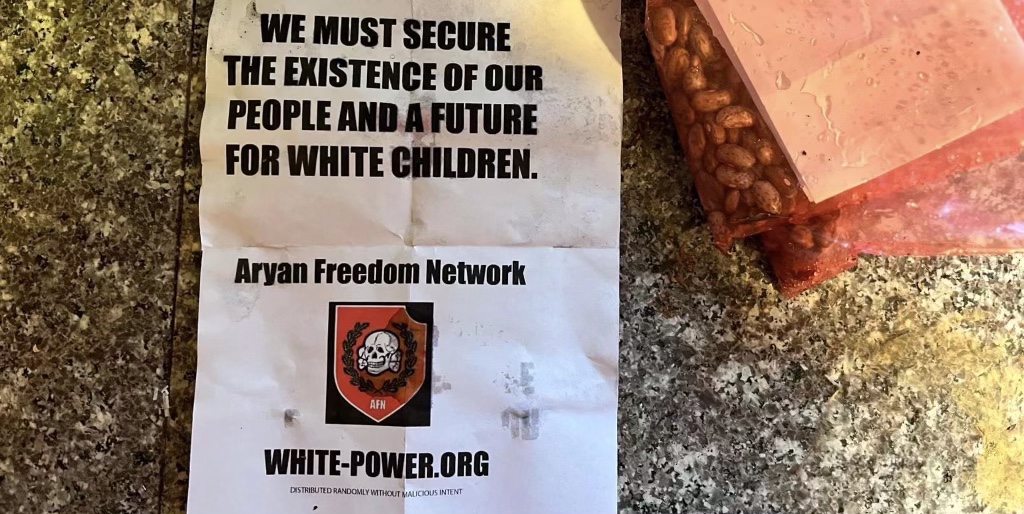
This situation is nothing new. Men in trucks flashing white power signs. Men in trucks hurling bottles and epithets. Men in trucks rumbling off the road toward families marching against police terror before swerving away at the last moment. I’ve experienced all this. Ordinarily I’d be working with a full security crew, pistols concealed but at the ready in case another deadly Charlottesville style vehicle attack unfolds. Now it’s just me and three children, all so young they can’t comprehend political issues like rising fascism. They aren’t aware that two weeks ago neo-Nazi leaflets were spread around Portland area dwellings to intimidate families like us. Still, like any playground veterans, they understand bullies and clearly see this one hates them because their skin is different from his.
Sent to me by a nearby friend in the Portland area. These were packed inside bags of beans and thrown at houses during the night
As a white man with a Black wife and Black kids, my social status is split. In most other situations, that fellow in the red pickup would automatically treat me with respect. Maybe swapping jokes on a job site or admiring my own diesel rig. The only times I’ve been asked to leave public parks was by police officers. Exasperated, but politely responding to late night noise complaints from irate neighbors. No exclusions. No checking bottles or IDs. Just: PLEASE LEAVE THE PARK! THE PARK IS CLOSED! Unearned white privilege at its finest.
But sometimes privilege can be a shield. For now, facing off with the red truck, I stay in front, edging slowly sideways while assuring the kids we’ll be ok. It’s only a guess on my part. The man may have nothing left to lose and decided this evening to initiate his Christchurch. Though perhaps he slowly realizes, eliminating just one mixed family before going out in a blaze of gunfire with the cops isn’t quite worth it. Or maybe he notices security cameras posted on a nearby school building pointed right at his tailgate. Either way, he peels out of the lot in a hurry and speeds away, tires screeching.
So we make it home safe. My little ones are shaken but soon distracted by dinner and eventually books before bed. We read them stories about sharing with friends and being kind to others. They can’t help observing that the man in the red truck wasn’t very kind. I’m afraid the park may seem frightening but instead, the very next day they insist we all troop there together again. Everyone runs and swings and chases to their heart’s content, though my gaze constantly monitors traffic. It may seem like victories against bigotry are few these days, but at least our kids won’t let one local fascist ruin their play area. They’re still small… but so brave and we’re so proud of them.
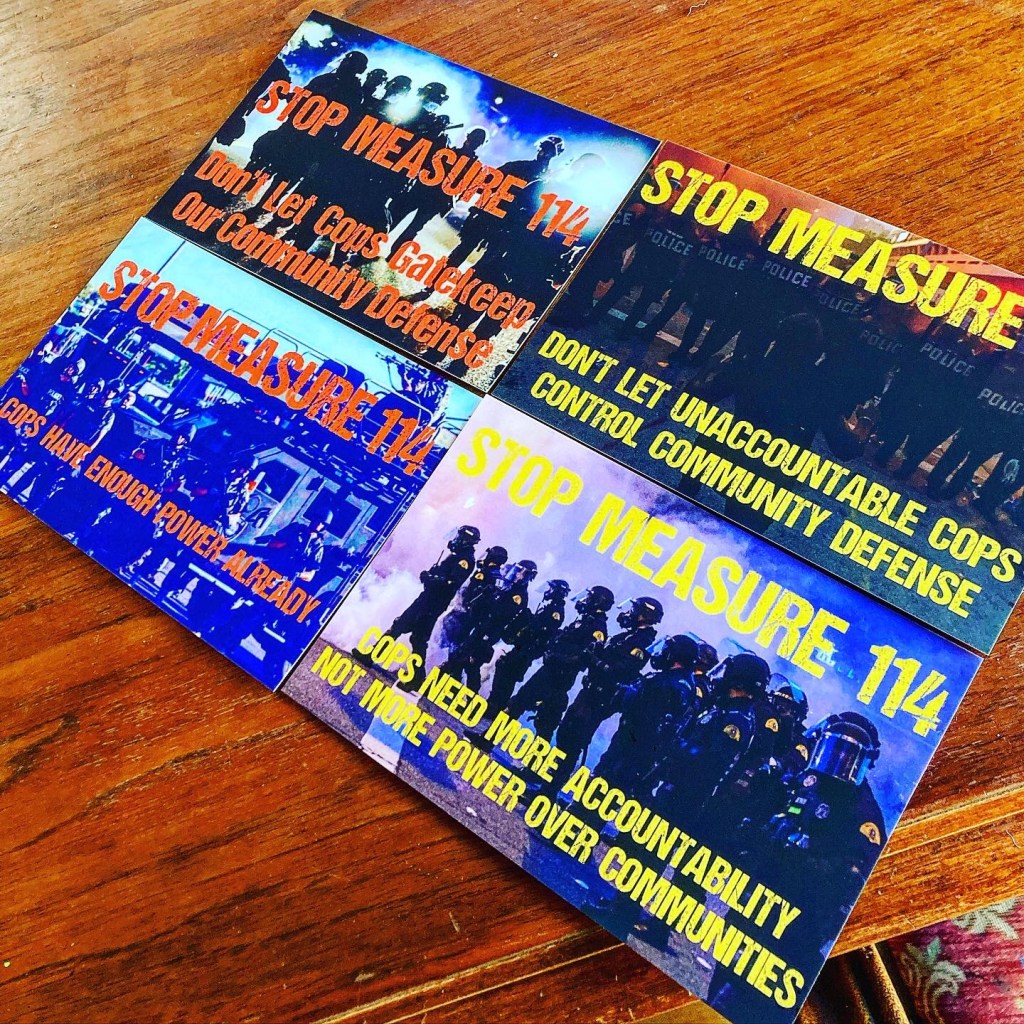
Thanks to everyone who joined in and contributed towards fighting Measure 114. Unfortunately this regressive law passed, though extremely narrowly. Because 114 was written vaguely and potential litigation may slow things down, it’s difficult to say how things will unfold next. However, some issues can be addressed:
1.The Race Factor It’s not just an empty slogan when people say “Gun Control is Racist.” This typically comes into play through implicit bias in policing, yet Oregon has already provided especially blatant examples of this. Sheriffs in several overwhelmingly white counties have declared they will not enforce the measure. Even if they eventually reverse themselves, it will be obvious to rank and file officers what is expected, making Measure 114 a functional law against self defense only where significant communities of color exist.
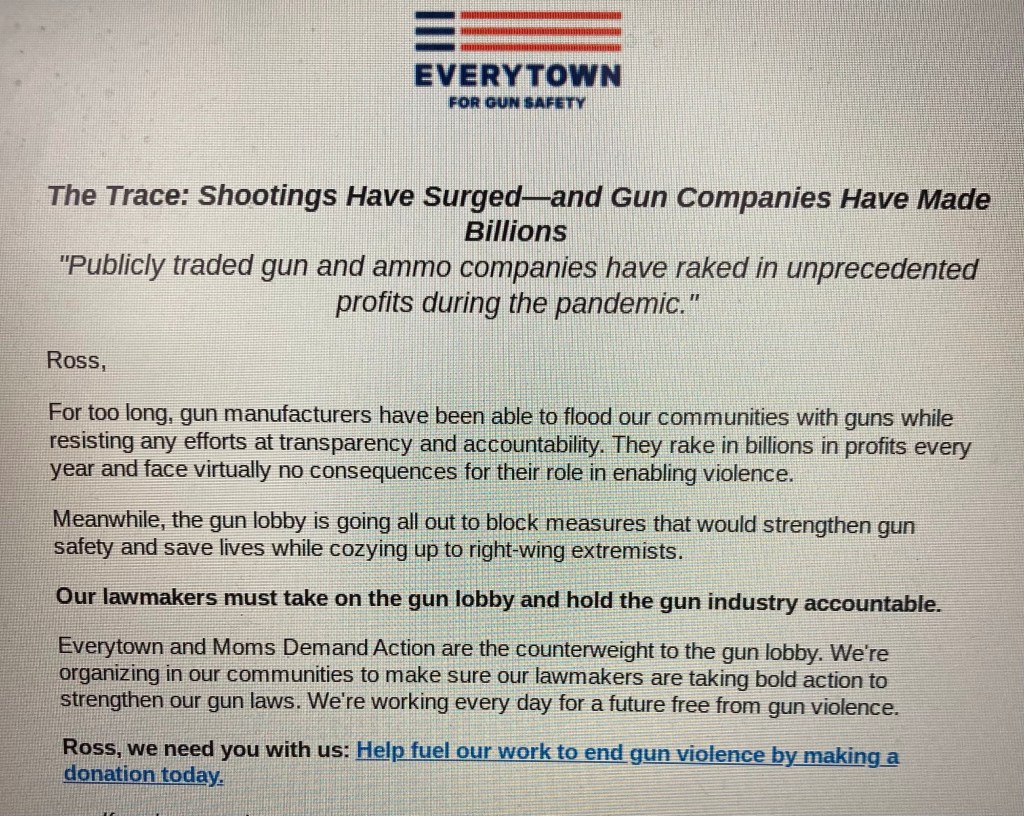
One of many mailers sent out by pro-114 groups
2. Manufactured Moral Panic One of the most sensational claims promoted by gun control advocates in Measure 114 propaganda is that firearms are now the leading cause of death among children. This is only technically accurate using skewed definitions of the word “children” in two ways. The first is eliminating infants under one years old, whose mortality rate from various causes are higher than gun related deaths. The second is including young adults aged eighteen and nineteen, which bumps the statistics enough to surpass other leading fatalities.
It’s an incredibly cynical scare tactic, considering this age group votes, serves in the military, and in many cases have kids of their own. Gun violence is real and affects too many actual children, but manufacturing data to create a moral panic only makes dialogue towards solutions more difficult.
3. Money Talks I subscribe to many gun control email lists and see how fundraising ploys profit from skewed arms industry caricatures. Their carefully crafted image portrays plucky grassroots activists opposing a powerful NRA who bribe politicians with money from shady weapons manufacturers. Yet the numbers don’t match this fantasy. Pro-114 groups raised 2.4 million dollars, while those opposing scraped together just a couple hundred thousand. 114 backers reaped massive donations from billionaire tech magnates and the wealthy financier Michael Bloomberg.
The embattled NRA only ponied up $25,700 and then bungled reporting it, earning an $8,000 fine for their incompetence. The reality is pro-gun groups possess cultural clout but nothing approaching the vast resources of other notorious lobbying groups, such as Amazon or Pfizer. The NRA is a trash fire of racism and greed and operates nowhere near the same level as arms manufacturing behemoths like Lockheed-Martin or Raytheon who have little interest in donating towards 2nd Amendment causes.
4. Delays Can be Dangerous On December 8th all legal gun sales in Oregon will halt, unless some last minute injunction delays the measure. It’s unclear when they will continue, placing anyone who might need emergency self defense in a precarious situation.
Many times people have approached me for gun training who never thought they needed a firearm until something dramatically changed in their life. Perhaps stalking and violence from an ex-partner, with subsequent dismissiveness from the police. Perhaps a sudden barrage of death threats from fascists and discovering their home address broadcast on the internet. People in immediate danger must either face it unarmed or potentially buy illegal guns on the black market, further placing themselves in legal jeopardy.
5. Unintended Consequences Oregon hasn’t elected a Republican governor since 1982 and Democrats enjoy a lockdown on every statewide office yet this time their candidate Tina Kotek barely edged out her main opponent. Most analysis of this faults Betsy Johnson, a former Democrat running as an independent who possibly drew more votes away from Kotek than her Republican challenger.
Interestingly, Johnson was a very pro-firearm voice in the state senate who acknowledges owning a machine gun. In 2012 she spoke to the annual national meeting of the Liberal Gun Club in Portland, which I attended, and recounted hanging a pink bandoleer full of toy ammunition in the senate cloakroom to annoy anti-gun Democrats.
Laying blame on Johnson for denying Kotek a landslide victory is easy, yet left unexamined is how Measure 114 galvanized conservative voters. For example, Measure 111 guaranteeing affordable health care barely passed and even Measure 112 which removed slavery from the constitution only received a 55.6 majority. When gun control laws appear on the ballot, they endanger actual progressive issues by associated backlash and even Democratic candidates in ordinarily friendly territory.
1. I was asked by an indigenous activist in rural Oregon to help provide community defense training and organize security details for events. She lives under constant threat from local fascists who published her address on the internet and even the school her children attend, claiming they will kill her and the kids as well. Instead of investigating these threats, local police posted her photo on their websites as a warning to other activists, despite her never having been charged or convicted of any crime. In fear for her life, she passed a federal background check and was able to legally purchase a gun. If OR 114 was in effect, she would have also needed to obtain special permission from the police, the same ones colluding with fascists threatening to murder her family.
2. Just a couple months ago one of my close friends stopped a knife wielding man attempting a gay bashing attack in a grocery store parking lot. He drew his concealed carry pistol and pointed it at the man, immediately ending the assault. When police arrived, they questioned the attacker, and because my friend stopped him before anyone was injured, simply let him go. This is typical of most instances when a firearm is used for self defense and why statistics are so difficult to come by. Just as the cops were disinterested in an attempted gay bashing, nobody keeps files on cases where firearms ended conflicts nonviolently. The pistol my friend used had a capacity over ten rounds. If OE 114 were in effect, he might have been the one arrested.
These are just two of many circumstances that really drive home what a damaging law 114 would be and why I’m fighting back. My argument against it will appear in the Oregon voter pamphlet this November and I currently have a GOFUNDME set up to help with that expense. If you can contribute a few dollars, it really means a lot.
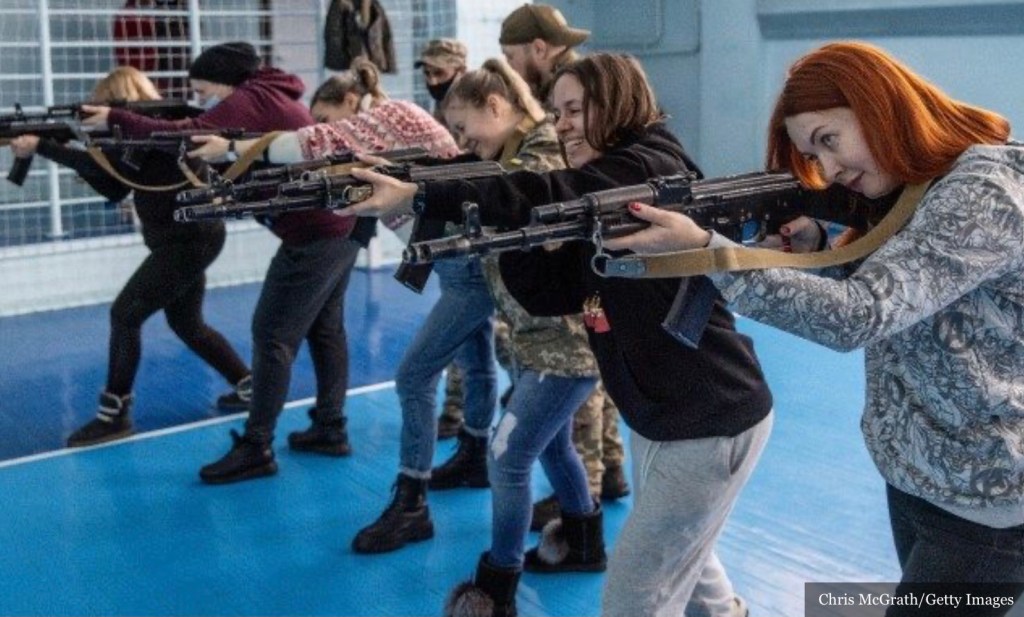
Ukrainian civilians training for community defense
Don’t Be Pushy.
Debating gun politics is never smart while another mass shooting dominates the media. Rational discussions are rarely possible while emotions remain elevated and newsfeeds are awash in trauma. Heated arguments only make productive communication harder later on. There’s nothing wrong with walking away and saving serious conversations for later.
Remain Respectful.
This is always important but even more so when being disrespectful appears callous towards victims. Posturing and snarky comments may feel good in the moment but only solidifies opposition. Consider actually reading articles by anti-gun activists and becoming familiar with their perspectives. Many people have very sincere personal reasons for disliking firearms and should be empathized with, even if their solutions are shortsighted.
Smash the Narrative.
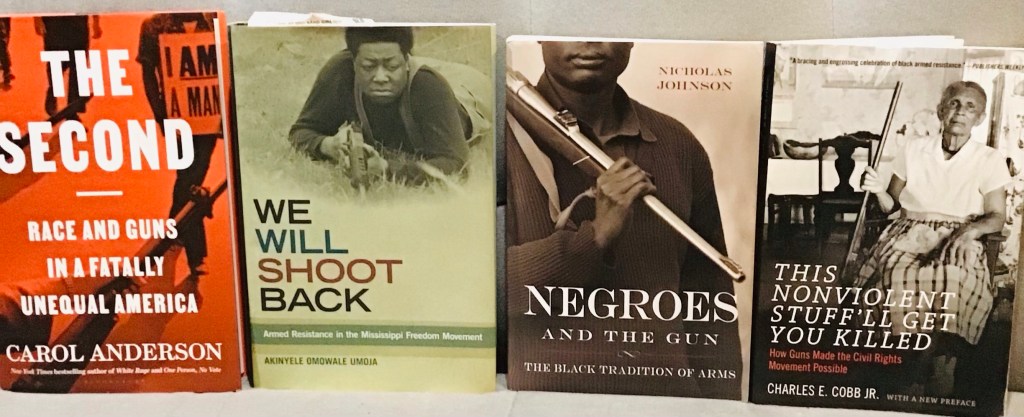
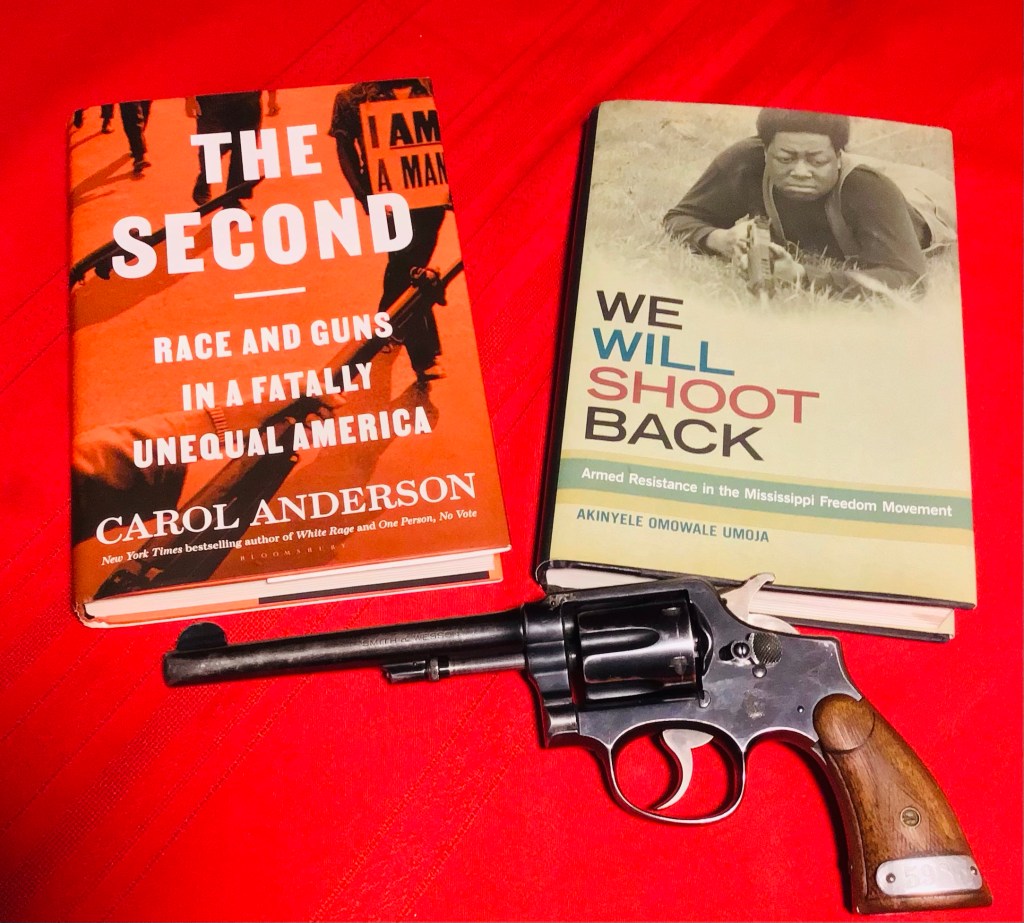
Most liberals are only familiar with stale right wing pro-gun arguments. Instead, learn about Ida B.Wells and Ossian Sweet. Read books by Akinyele Umoja and Carol Anderson. Explain how firearms should only be used for protecting communities and individuals when lives are in danger. Warn against the rising tide of violent fascism which increasingly puts marginalized communities at risk. Keep up on current events, like when BLM security in Portland used an AR-15 to stop a racist mass shooter . Remind them how recently they cheered Ukrainian civilians taking up arms against Russian invaders.
Abolish Cops.
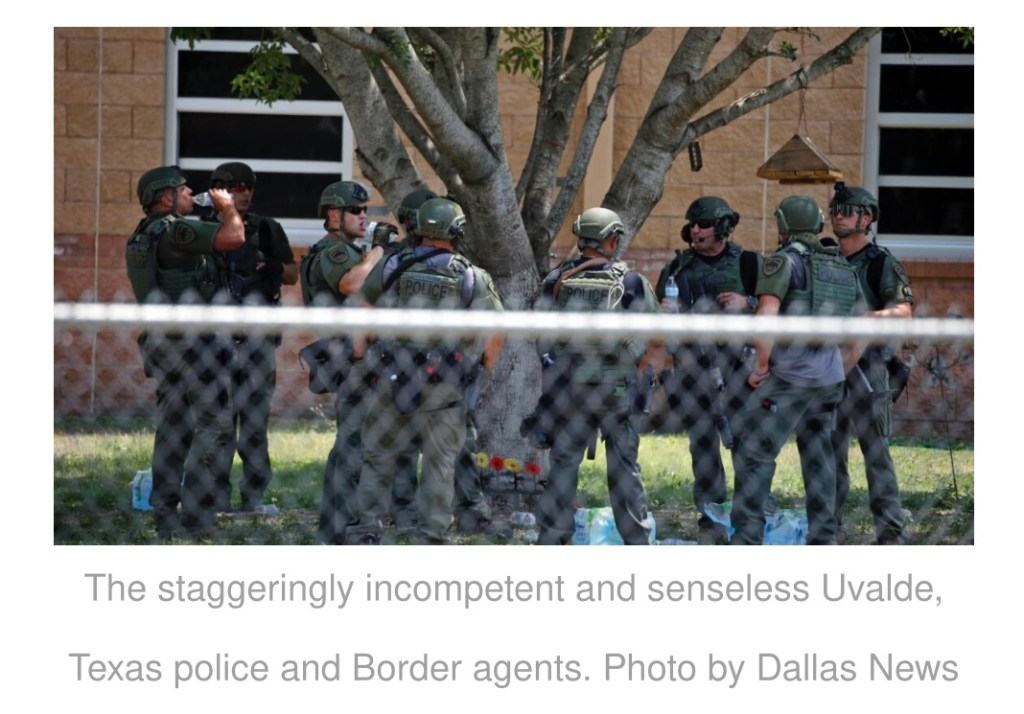
This is a moment when police incompetence and lack of accountability shines on full display like never before. Demonstrate awareness of how racism affects the criminal justice system and cops in particular. From Ferguson to Uvalde, liberals are often highly receptive to law enforcement criticism and that’s an advantage toward helping them see value in community defense. We keep us safe.
The Second isn’t Sacred.
Derail any debate about the 2nd Amendment by pointing out it was the most intrusive gun control measure in American history. Like every other freedom in the Bill of Rights, it was intended for whites only and used as justification for mass gun confiscations and disarming Black militias. Learn about the Cruikshank supreme court case which maintained this interpretation well into the 20th century. The 2nd Amendment only holds meaning once occupied and reclaimed as a means to keep all our communities secure.
Since 2004 I’ve written about gun politics and conducted defensive small arms training among threatened communities. This background provided much perspective on the escalation following Donald Trump’s election which energized domestic fascist movements and set loose waves of assaults against immigrants, minorities and others along the left political spectrum. Everyone knows how this newly respectable xenophobia amplified right wing violence. Mass shootings, vehicle attacks and death threats against groups organizing to protect themselves.
Previously, most conservatives I encountered appreciated my efforts expanding gun culture outside it’s unfairly stereotyped niche of Republicans, rednecks and hillbillies. Now even mentioning that I do such work often draws comments that I should be killed. It’s a real shift. Over recent years protecting groups marching against state sanctioned terror, I’ve lost count of the times big trucks adorned with American flags and Trump banners revved their engines and raced toward pedestrians, only swerving away at the last minute.
The many victims at Charlottesville, El Paso, Charleston, Pittsburgh and the Portland MAX attack, to name only a few, were less fortunate. I know others beaten by fascists or severely injured from crowd control munitions during anti-Trump or Black Lives Matter protests, but always returned home safe myself. Most people close to me also came away relatively unharmed.
That grace period ended last weekend when a Portland man opened fire on activists peacefully demanding police accountability in a local park. He murdered a sixty year old disabled woman and wounded four others, several critically. One of the survivors is a dear friend of mine. She is likely only alive today because a nearby security volunteer shot back and disabled the man before his rampage continued.
Details are still emerging about this individual, but some things are clear. He was a fan of right wing figures and groups, from Alex Jones and Andy Ngo to the Proud Boys, plus idolized Kyle Rittenhouse, another armed man who went out looking to fight anti-fascists. His own longtime roommate has since spoken out, describing a trajectory of increased racism and misogyny that made her fearful, stating she believed the person who shot him “saved my life.”
Most who nurture imagined grievances, like the presidential election being stolen or Covid vaccines containing microchips, or that organized pedophiles are responsible for their woes, don’t engage in physical violence, yet still enable a toxic conspiracy culture. It took purely insidious motivation to convince someone that a sixty year old walking with a cane presented some threat requiring gunfire to solve.
I have much more to say about that, but at least there is one concrete thing we can do. The survivors here in Portland need financial assistance and if anyone can spare some dollars, I’ve verified that their GoFundMe account is active and going directly to help those affected. Thanks to everyone who can pitch in and help.
I’ve written before about the old time radio program Dr. Sixgun, which stands out as remarkable amidst the Western genre for its compassionate depiction of typically disparaged groups, such as immigrants and Indians. Instead of sanitized history, the story lines unflinchingly portray cruelty by American settlers and the human cost of colonization is on full display.
Because Dr. Sixgun presents such a contrary narrative among stereotypical Westerns and doesn’t shirk from social issues, it wasn’t surprising that the episode No Guns Ordinance touched on gun control. This one began with Dr. Grey Matson, the famed Dr. Sixgun himself, entering a town called Rail End. He became surprised upon discovering open carry was recently banned by order of the local sheriff, Marshall Anders. Despite his proficient reputation with a revolver, Dr. Matson remained a thoughtful physician who frequently treated shooting victims. He checked his six-gun without argument and then sought out Anders, curious to learn more about this experiment.
The marshall explained: “I can tell ya, if I had my choice, once I get hold of a crazy drunk on the way to the pokey on a Saturday night, I’d just as soon I was the only one totin’ a gun.” He elaborated as having been inspired by the iconic lawman Wyatt Earp. With this reference, Dr. Sixgun writers knew their history. Back in the day, even such classic frontier locations as Deadwood and Dodge City were known for strict gun control ordinances. In fact, Wyatt Earp’s famous shootout at the O.K. Coral involved his opponents violating firearms regulations in Tombstone, Arizona.
A depiction of the O.K. Coral shootout in 1881
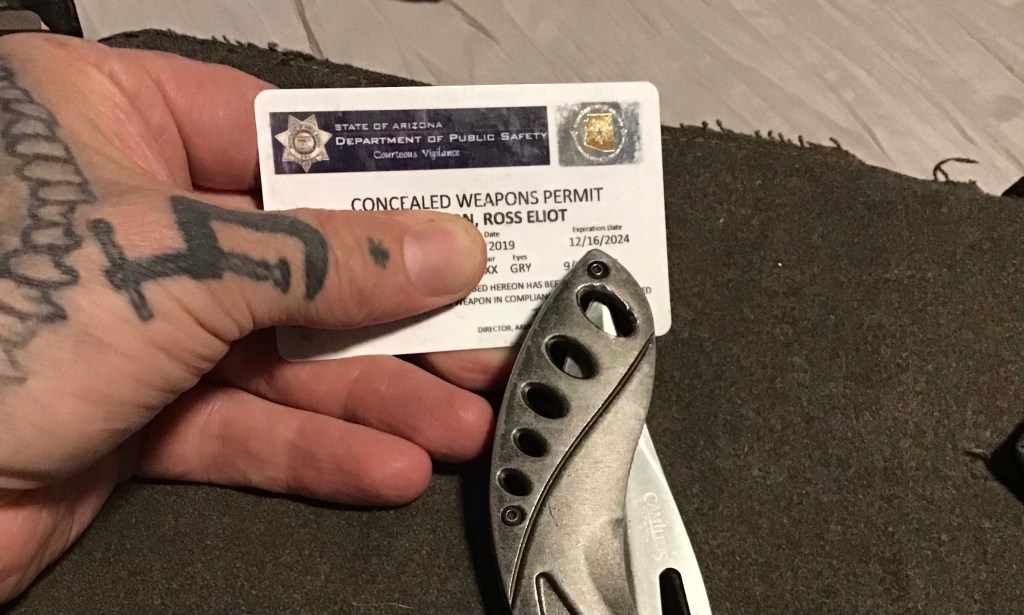
It’s no exaggeration that modern Arizona gun control laws are far more permissive than during Dr. Sixgun’s era. For example, I personally possess an out-of-state permit issued by Arizona which lets me carry concealed firearms there, plus several other states, despite my residence in Oregon. Highlighting this is important, as so much right-wing propaganda builds upon skewed pictures of the past, falsely mythologizing the Old West as a place where Americans lived more freely and that some slow decline in liberty has progressed since then. It’s all complete lies, of course. Frontier times were far more restrictive on individual lives than any conservative today would admit tolerating.
As the story continued, Marshall Anders boasted his policy had successfully reduced murders and Dr. Matson left the town feeling quite inspired, remarking: “That ordinance, that must be the answer . . . . .take the guns away and they won’t be so quick to fight…. I get awful tired of probing for bullets and sewing up wounds. I got more important things to do.”
Dr. Matson subsequently attempted persuading others that gun control could work yet only met with derision from others in the territory. Ranchers and bartenders and even his own local sheriff showed complete disinterest or open contempt for such a scheme, several calling it “against nature.” Faced with overwhelming opposition, he finally gave up promoting the idea. Some time later, Matson’s travels led him back to Rail End where he turned over his revolver to a new sheriff named Marshall Benson. It soon became apparent things were not well, despite surface tranquility. Sinister armed men lurked about, closely monitoring conversations between citizens and keeping tabs on everyone. Each wore an official lawman’s badge
It turned out months before, Benson and a gang of corrupt deputies had pushed Marshall Anders out of power and began running the place as their own personal fiefdom. With everyone else disarmed, no one could oppose them. Whereas most episodes of Dr. Sixgun resolve conflicts, this one concluded on a tragic note. Fearing for his life, Dr. Matson fled the town which remained in the grip of unaccountable cops, maintained through fear, and of course, a firearms monopoly.
Appropriately, the first scene Dr. Matson encountered after leaving Rail End, with its chilling calm, was a boisterous crowd of drunken cowboys waving revolvers and firing off shots willy-nilly. He regretfully acknowledged this as a preferable trade off against the police state tyranny so recently experienced. Wrap up narration dismally recounted that Rail End residents eventually placed hope in electing a new sheriff, though Benson’s leading opponent was murdered before this could take place.
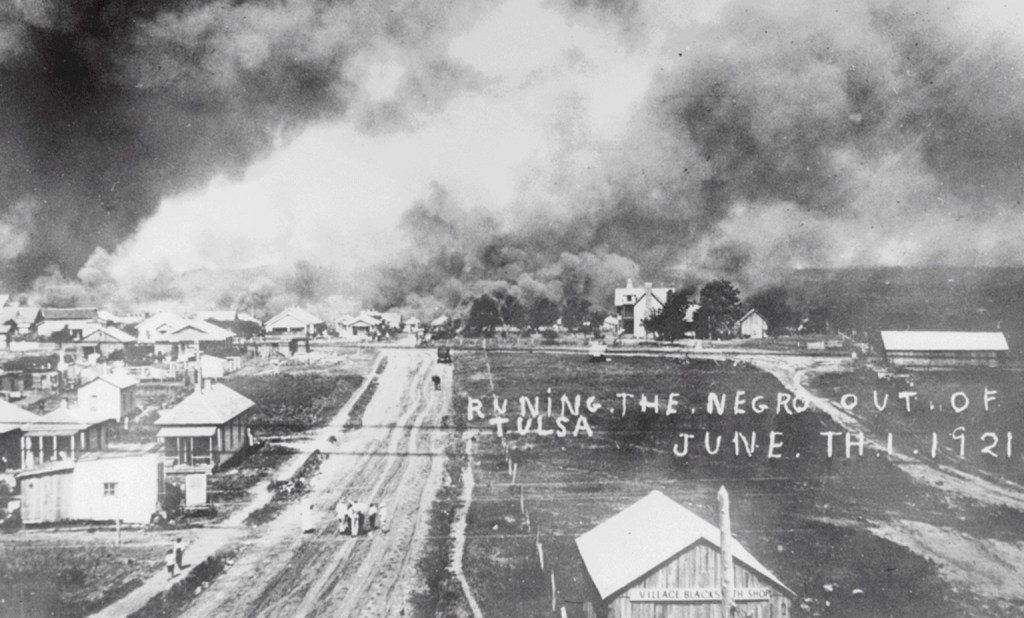
Armed community defense didn’t stop Black Wall Street in Tulsa, Oklahoma from being annihilated by white mobs and police in 1921
It sounds reasonable at first, yet Matson’s observation presents a false choice. Banning firearms simply isn’t required for an oppressive government to exist, as examples from the Colfax Massacre to Black Wall Street demonstrate. In more recent times, Black citizens of Ferguson, Missouri were no less armed than other Americans, yet knew shooting back against police terror, as their ancestors sometimes had, would be futile. Just as it’s foolish to imagine eliminating firearms automatically creates peace, the reverse is also true. Well armed societies are often rampant with injustice. Gun control might be one factor in maintaining systems of tyranny, but not necessarily constitute the main ingredient.
Old time militias enforcing government sanctioned gun control? That’s certainly an image contrary to the one cultivated by many 2nd Amendment supporters. But while some harken back to a selective version of America’s past, in her recent book The Second, historian Carol Anderson carefully examines what purpose that amendment actually signified in practice. It’s a far cry from what modern day patriotic propaganda would have people believe.
Anderson’s work parallels one of the most exciting genres in American historical scholarship, which has seen increasing numbers of academics researching Black resistance movements that mobilized against post-Civil War Reconstruction and Jim Crow era persecution. While most white-washed histories of the Civil Rights struggle spin redemptive tales about noble suffering and non-violent tactics winning victories toward greater social equality, these new explorations grasp gut level human realities, often less appealing than earlier sanitized versions.
In just one sensational example, the historian Akinyele Umoja looked at a Mississippi region where KKK influence waned in the early 1960s, allowing establishment of successful voter registration drives. Yet digging deeper, he discovered this power vacuum only developed after Black militia members successfully repelled invading nightriders, before posting the decapitated head of one fallen Klansman on a bridge as warning. This act so horrified nearby white militants that they simply gave up control of the area. (1)
Anderson wrestles with issues no less intense, but from a different angle. She begins scrutinizing how gun control affected Black populations in the Americas under various colonial powers. During British rule, each of the original thirteen colonies enacted stringent laws forbidding enslaved population’s arms, plus highly regulating their ownership by any free people of color. (2) But even these small privileges were curtailed once the War of Independence began. North Carolina offered rewards to those who successfully confiscated guns from Black communities and other states clamped down harder as well. (3) No wonder they were fearful. Martha Washington was perhaps the first to use the phrase “contagion of liberty” (4) describing the terror herself and others whose wealth originated in human bondage felt after realizing so much lofty talk about Liberty, Inalienable Rights, and All Men Being Created Equal might spark similar aspirations among African-Americans, free or enslaved.
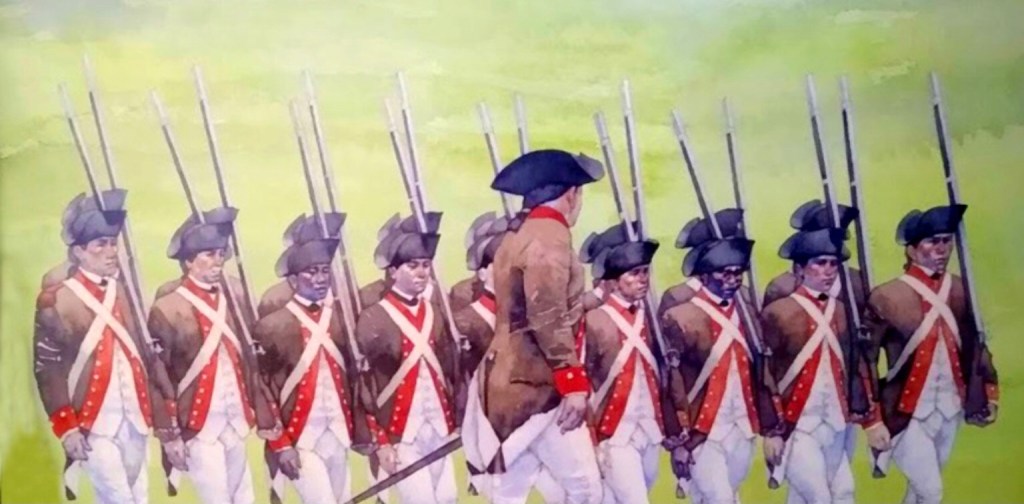
Indeed, many people of color were thrilled hearing these values so openly praised, yet in most states, militia membership and firearms had long been exclusively for whites only. Only after US forces suffered repeated defeats did several states begin recruiting Black men, including Connecticut, Massachusetts, Rhode Island, and Virginia. Then, when British forces began moving against South Carolina, US military officers begged state officials to let Black soldiers serve and bolster the ranks of exhausted militias. Incredibly, this American legislature deliberated and finally decided they preferred surrender to the British than allow non-whites arms. (5)
Henley’s Additional Regiment, an integrated unit from Massachusetts and New Hampshire, 1779.
Still, some free Black militias had existed for decades who trained with their own rifles and earned exceptionally brave reputations. This was not under United States law however, but allowed by Spanish and French colonial administrations, especially in Louisiana. As soon as these areas fell under American annexation, the 2nd Amendment provided no protection and gun control laws enforced by white militias disarmed these populations as well. (6) It actually became an embarrassing point during the War of 1812 after British regular soldiers smashed through ineffective militia forces and captured the US capitol. Their next target was New Orleans, where the governor of Louisiana recognized state militia troops were greatly insufficient. Faced with dire circumstances, he offered rifles to Black militia veterans and begged for help. Six-hundred volunteered and joined with a multi-racial force that contributed one of America’s few military victories in the entire war. General Andrew Jackson (of all people) even commended them for special valor. Yet instead of medals, these courageous men were afterward awarded heavy labor details in swamps and the Black militias forcibly disbanded once more. (7)
Anderson’s study exposes a familiar repetition marching forward. While it’s not uncommon for modern pro-2nd Amendment advocates to reference what became known as Black Codes, when denouncing firearms regulations as racist, more rarely do they acknowledge the enforcement role militias played. In the case of Georgia, white men were required to own guns, but specifically in legal reference to the militia’s need for self protection while searching the homes of Black families for weapons. (8) Moving deeper into the nineteenth-century, numerous other states passed strict laws, from Virginia, where free Black people found with firearms received thirty-nine lashes, to Florida, where white militias could search the homes of Black families for arms whenever they pleased, and the more lenient North Carolina, which allowed free Black people to apply for yearly permits before owning anything from shotguns to knives. (9)
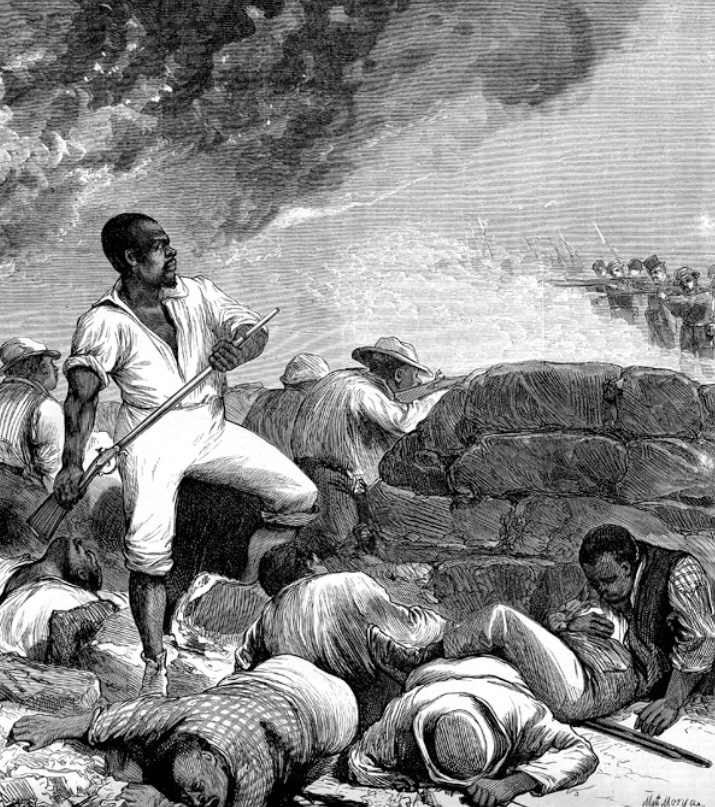
A contemporary artist’s depiction of the Colfax Massacre
The list of draconian gun control measures considered legal under the 2nd Amendment, even long after slavery was abolished, stretches on. Time and again, it provided no protection for Black communities who defended themselves against organized violent attacks, from the Colfax Massacre of 1873, to the Hamburg Massacre of 1876, and the destruction of Black Wall Street in 1921. Courts and judges routinely dismissed the Constitution, Bill of Rights and 2nd Amendment included, as legal grounds for non-whites to enjoy their full human existence as Americans.
This should be a sharp wake up call to anyone still viewing the 2nd Amendment as some wise, holy governance handed down through time. It’s own authors supported the most invasive firearms confiscations in US history. Like the title of my weblog has long declared, the 2nd Amendment must be occupied and reformed… into a tool for seizing gun culture back from what the founders originally intended. Simply another way for maintaining white supremacy and upper class dominion. Liberty may be a contagion… and Martha Washington meant that as an insult- but we can still take pride spreading it far and wide.
Akinyele Omowale Umoja. We Will Shoot Back. New York University Press, New York. 2013. 58-9.
Carol Anderson. The Second: Race and Guns in a Fatally Unequal America. Bloomsbury Publishing, New York. 2021. 18.
I currently work for a low-income housing non profit. While being part of an industry that helps people in our community is rewarding, this regularly puts myself and my co-workers in contact with individuals experiencing crisis, whether mental health or substance abuse related. Despite occasional tense moments, we do our best de-escalating confrontations and negotiating solutions as best we can. Very rarely does anyone get hurt.
One exception took place several years ago at an apartment complex in our portfolio. A male resident barged into the leasing office with a baseball bat and struck the building manager over the head, knocking her unconscious. He then ran out and began assaulting other people nearby. Amidst this chaos, the manager recovered enough to retrieve a can of mace from her purse. She bravely intercepted the assailant and sprayed him down, incapacitating the man until police arrived.
Once she returned from a brief hospital stay, co-workers and residents congratulated this woman for quick thinking and resourcefulness that certainly prevented more serious injuries. Yet, our official corporate response was more subdued. An all-staff email reminded everyone that our employee agreement prohibited self defense instruments on company property. As one might imagine, this included firearms, but also pepper spray and electric tasers.
At the time, this sparked consternation, with several building managers openly declaring they would rather be fired than leave themselves defenseless. They pointed out how violent abusers stalk victims in many locations, workplaces included. Some women mentioned personally surviving domestic assault and how keeping a taser or pepper spray nearby was simply how they lived their lives now. Leaving self defense tools at home would create huge gaps in their personal safety… not just on site, but during commutes, plus any side trips or appointments along the way.
A damage control email quickly made the rounds, promising all field offices would soon have panic buttons installed under the desks. Some employees grumbled, pointing out any response would still be delayed, but in general, this declaration calmed things. After a couple months, I checked in with some managers, asking if their offices were set up yet. They grimly reported no. Perplexed, I questioned the head of maintenance, inquiring about progress. He responded vaguely, reporting that details were still being ironed out and assured me I’d be kept in the loop. More months went by…then years, and that was the last anyone heard about panic buttons as far as I’m aware.
So, what does this have to do with gun politics? Well, laws ostensibly regulating firearms sometimes reach much further than expected, just like workplace rules. Oregon Senate Bill 554, recently passed by the legislature reads:
166.370. (1)(a) Any person who intentionally possesses a loaded or unloaded firearm or any other instrument used as a dangerous weapon, while in or on a public building, shall upon conviction be guilty of a Class C felony.
The term “weapon” is defined by listing an array of objects including:
(c) Mace, tear gas, pepper mace or any similar deleterious agent as defined in ORS 163.211; (d) An electrical stun gun or any similar instrument;
Now, as everyone should be well aware, laws are not enforced equally. Regarding my earlier example, during an all-staff meeting following that incident, the head of HR reminded everyone about our policy against self defense items. I glanced over at one of the building managers who earlier voiced disagreement and sure enough, sitting on the table in front of her glinted a can of pepper spray clipped onto her key ring. Nobody said a damn thing.
It seemed moderately hilarious at the time, but looking back, highlights how privilege and bias play out. This building manager was a white woman, well regarded at our nonprofit after years of service, and clearly felt little concern over breaking a major company regulation while preserving her own sense of security. I absolutely support her in doing so, but also wonder about my other co-workers, Black and Brown women with similar safety concerns, yet less confident in their employment, who make personal risk equations every day. Which is more endangered right now? Their life or their job?
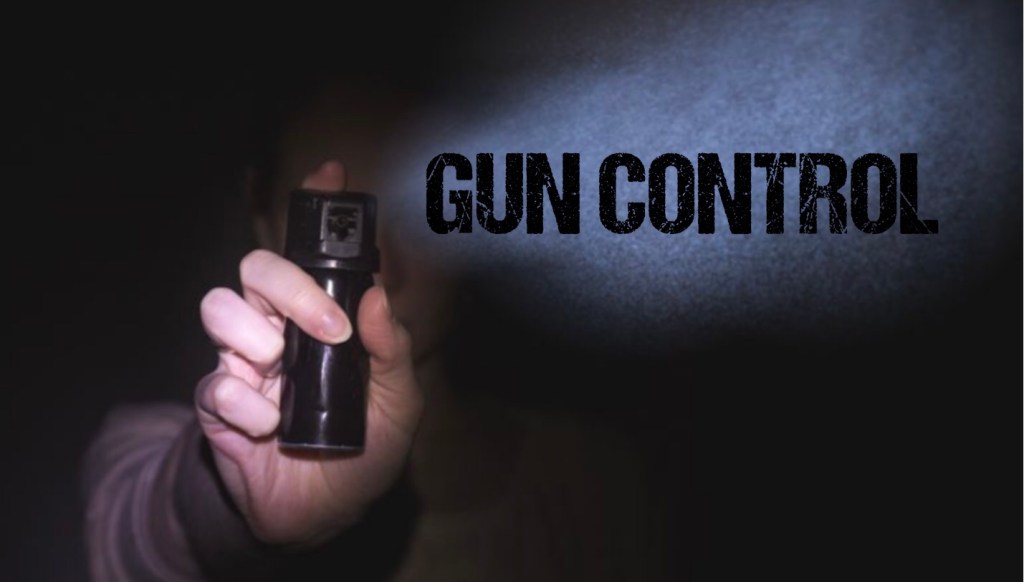
Likewise, as more locations adopt policies prohibiting many people’s self defense options, already marginalized populations necessarily feel the pressure more. Several years ago I received a tearful phone call from a friend in another city. She was sheltering in a public library after running from a man who had sexually assaulted her nearby. It seemed like an easy decision, but what if she had a mace canister buried in her backpack? Under SB 554, instead of finding sanctuary, she could now be a felon for violating laws promoted to the public as reducing gun violence. While my white co-worker might feel secure in authorities giving her a pass on that, in this case my friend hiding from her assailant was a Black woman, too afraid of the police to call 911.
None of these complications are discussed in major media accounts of SB 554. Instead it’s described only as a bill to mandate safe storage of firearms and allow greater restrictions on where guns can be carried. It’s understandable why people are concerned about these issues. Firearms remain a hot commodity for theft, and while hindering access in emergency situations is problematic, greater numbers locked up securely will hopefully reduce unauthorized access. Likewise, as someone who has faced down armed fascist groups on the streets many times, I understand more than most the knee-jerk impulse to ban firearms from public places.
Being a butch white man, personal safety is rarely a concern for me. Potential predators detect a hard target and cops see a buddy they’d probably enjoy some beers with. Yet among many women- or any less physically intimidating individuals, daily life often resembles an anxiety ridden obstacle course… taking inconvenient routes around dark streets, staying alert for signs an abusive ex is back in town or checking in with friends during dates. Large numbers of people I know habitually carry self defense spray. It’s unlikely anyone would support limiting their ability in doing so, yet SB 554 has done this with virtually no discussion. We can argue about gun control… but when the safety of our most vulnerable neighbors is compromised as a byproduct, only dangerous abusers benefit.









 Occupy the 2nd Amendment