
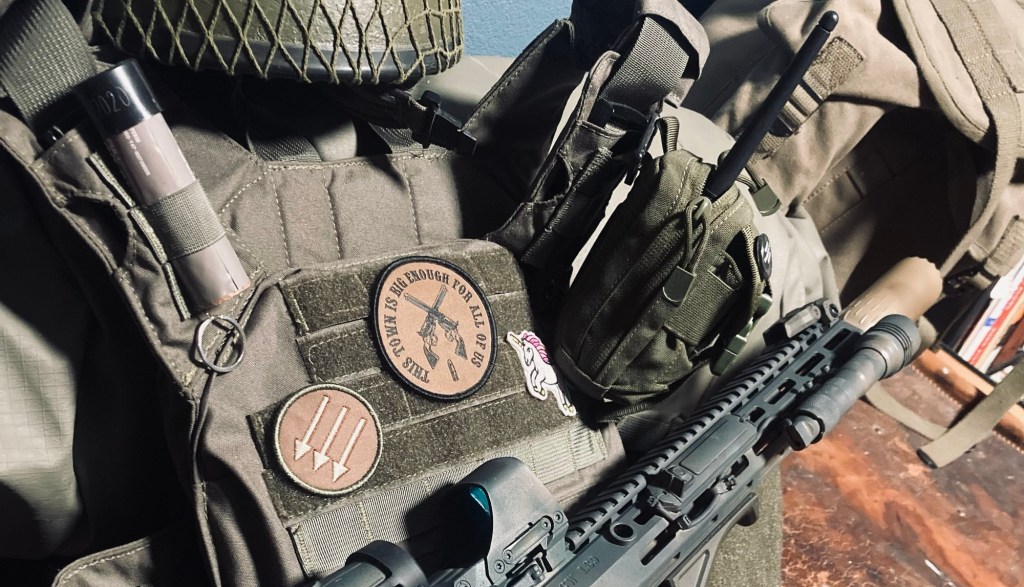
With Trump’s recent reelection and the prospect of right wing violence rising once more , it’s that time again when myself (and every other armed leftist) receives more requests for guidance and training than we can handle. So, before jumping in, please take a moment and reflect on whether gun ownership is right for you and your situation. There will be many roles necessary over the coming years as we struggle against fascism and not all require rifles on backs and pistols on hips.
- Guns are not amulets
In times of crisis when so many communities and individuals are vulnerable, buying a firearm shouldn’t be merely retail therapy. Because so much right wing posturing revolves around fetishizing gun culture, leftists can easily feel overly giddy anticipating their first purchase. It’s undeniably valuable gaining more equal footing with those who wish us harm, but firearms not consistently practiced with become worse than useless. They are a huge social and personal responsibility. Anyone who can’t commit to or afford regular training and necessary supplies should consider less lethal self defense options like pepper spray or tasers.
- Guns don’t create community.
Firearms can form a valuable part of community defense, but with no solid community base, what’s the point? Remember that the main strengths of leftist politics aren’t located in force of arms but popular values. Voters rejected a Democratic party skewing increasingly rightward and who moved moved beyond parody, actually embracing neoconservative specters like Dick Cheny. Progressive social issues remain winning ideals, even in states considered solid Trump territory. Xenophobia, nationalism, misogyny, isolationism, and bigotry still seduce many Americans, yet communities supporting reproductive freedom, promoting anti-racism, police accountability, gay rights, and anti authoritarianism are inspiring in their common decency. These are beliefs no reality TV demagogue can easily sweep aside and remain worth defending.
3. Ethical guns don’t exist*
One of the first questions I’m often asked is: “Can you point me to a liberal FFL dealer?” (Federal Firearms License) Here in Portland The People’s Armory exists, yet most places you’re best off ordering online through whatever nearby shop flies the fewest Confederate flags and hurrying out before some ogre in a Blue Lives Matter shirt sells you a questionable Turkish shotgun. The firearms industry is a dirty, unethical business and you shouldn’t select your first gun with the same mentality as fair trade kombucha at your local farmers market.
* I am aware some folks argue that CZ, for example, may be a somewhat less problematic company compared to others, but that feels like more advanced gun nerdery than beginners should worry about.
4. Gun laws are complex
Unfortunately, many people believe that firearms are barely regulated in the US. The fact is incredibly complex laws govern sales, usage, storage, and transfers. Besides federal laws, individual states, counties, and cities often have their own local statutes. It’s all a lot of information to take in. Just check out a few examples that can trip people up.
Is it permitted in your area to own magazines with 10 or more round capacity?
Where is it illegal to carry a gun even with a valid concealed carry license? (Oregon)
What added components would make your legally braced pistol an illegal rifle?
Knowing the answers to these and many other technical questions is critical, as getting even one wrong could be a felony.
5 Guns and gear worth having aren’t cheap
HANDGUNS: Currently a decent new 9mm semi-auto pistol goes for between $500 and $650. Trump’s victory may bring prices down over the next few months, as companies likely ramped up production to satisfy right wing panic if Harris won. Stick with major manufacturers like Glock, S&W, or SigSauer. Do you want a full sized model? Compact? Subcompact? It’ll take some research to decide what’s best for you.
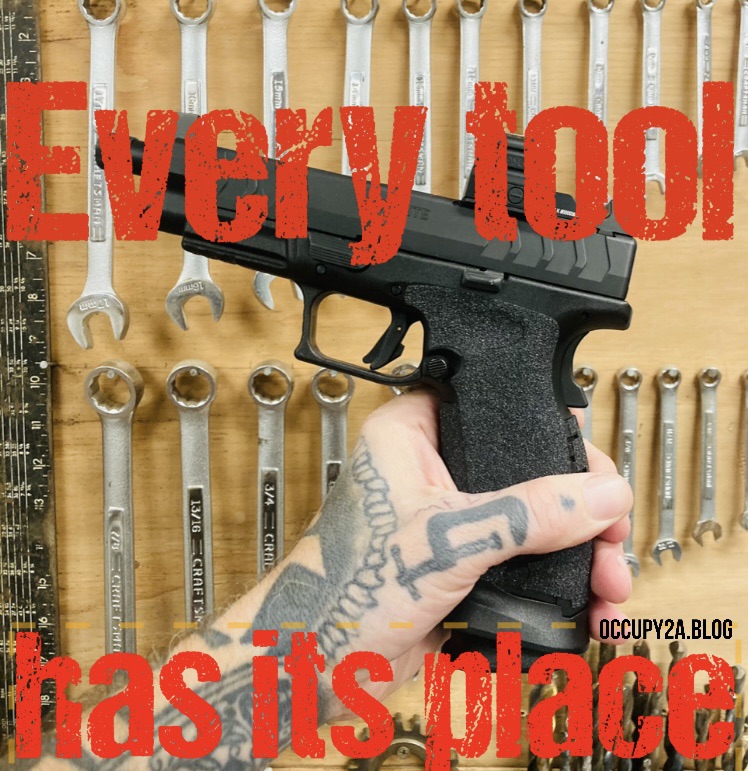
Don’t forget extra magazines. Typically new pistols come with two or three but five should be the bare minimum. These can go from $20-$45 each. Then there’s ammunition. Right now, 9mm Full Metal Jacket (FMJ) for practice can run below .25 a round and you’ll likely need a box of 500 or more for a good price. Hollow Points (HP) are required for actual self defense use. Reputable brands usually cost a dollar or more per cartridge. Buy as many as you can afford but at least 100 rounds. Also consider that most defensive shootings happen at night or in low visibility situations. A light mounted under the barrel adds another $100-200. But wait! You gotta put glass on that piece to get the most out of it! Good pistol optics allow faster and more accurate shooting but cost an additional $300-500.
How will you carry your new handgun? Holsters exist for every body type and carry style but run from $50 to several hundred bucks. If concealed carry is your plan, this varies state to state. For example, in Multnomah County where I live, the license costs $115 with a $75 renewal every four years.
Then there’s proper storage. Some localities require firearms be locked up when not in use. Every new gun should come with a cable lock that technically satisfies most regulations, but is slow to open, easily cut and the whole firearm itself can still be stolen. Especially if children or young people share your household, enhanced security must take priority. Don’t forget to lock up ammo separately. Fortunately technology has reached the point where quick access biometric handgun sized safes exist from $150-$250.
5.5 Decent guns and gear still aren’t cheap
RIFLES: Picking a semi-auto long gun suitable for community defense is much less complicated. Just get an AR-15 chambered in 5.56×45/.223. Once the only ARs worth having were nearly a thousand bucks and an AK ran less than half that. However, these days that position has fully reversed. Palmetto State Armory makes an AR for around $500 that gets good reviews and several other companies like S&W, Stag, and Ruger were in the same general bracket until recently. By contrast, good AKs cost over a grand now, though an antiquated design, less ergonomic and more difficult to upgrade.

The good news is that AR rifles are so ubiquitous in the US that a huge support industry exists. You’ll need more spare magazines, at least 20, but these are usually between $17-25 and sometimes even cheaper.
Right now 5.56x45mm/.223 FMJ ammunition costs around .35 cents per round but, per usual, only in bulk purchase. HP cartridges tend to be at least $1 each.
You’ll also be paying for a sling, weapons light, optic, mag pouch, shot timer, cleaning products, eye and hearing protection, gas to the range, practice targets, an emergency med kit with tourniquets plus a whole host of other things but you get the idea. Buying your first gun shouldn’t be a casual decision and if it seems more complicated now, then I’ve done my job.

 Occupy the 2nd Amendment