

Old time militias enforcing government sanctioned gun control? That’s certainly an image contrary to the one cultivated by many 2nd Amendment supporters. But while some harken back to a selective version of America’s past, in her recent book The Second, historian Carol Anderson carefully examines what purpose that amendment actually signified in practice. It’s a far cry from what modern day patriotic propaganda would have people believe.
Anderson’s work parallels one of the most exciting genres in American historical scholarship, which has seen increasing numbers of academics researching Black resistance movements that mobilized against post-Civil War Reconstruction and Jim Crow era persecution. While most white-washed histories of the Civil Rights struggle spin redemptive tales about noble suffering and non-violent tactics winning victories toward greater social equality, these new explorations grasp gut level human realities, often less appealing than earlier sanitized versions.
In just one sensational example, the historian Akinyele Umoja looked at a Mississippi region where KKK influence waned in the early 1960s, allowing establishment of successful voter registration drives. Yet digging deeper, he discovered this power vacuum only developed after Black militia members successfully repelled invading nightriders, before posting the decapitated head of one fallen Klansman on a bridge as warning. This act so horrified nearby white militants that they simply gave up control of the area. (1)
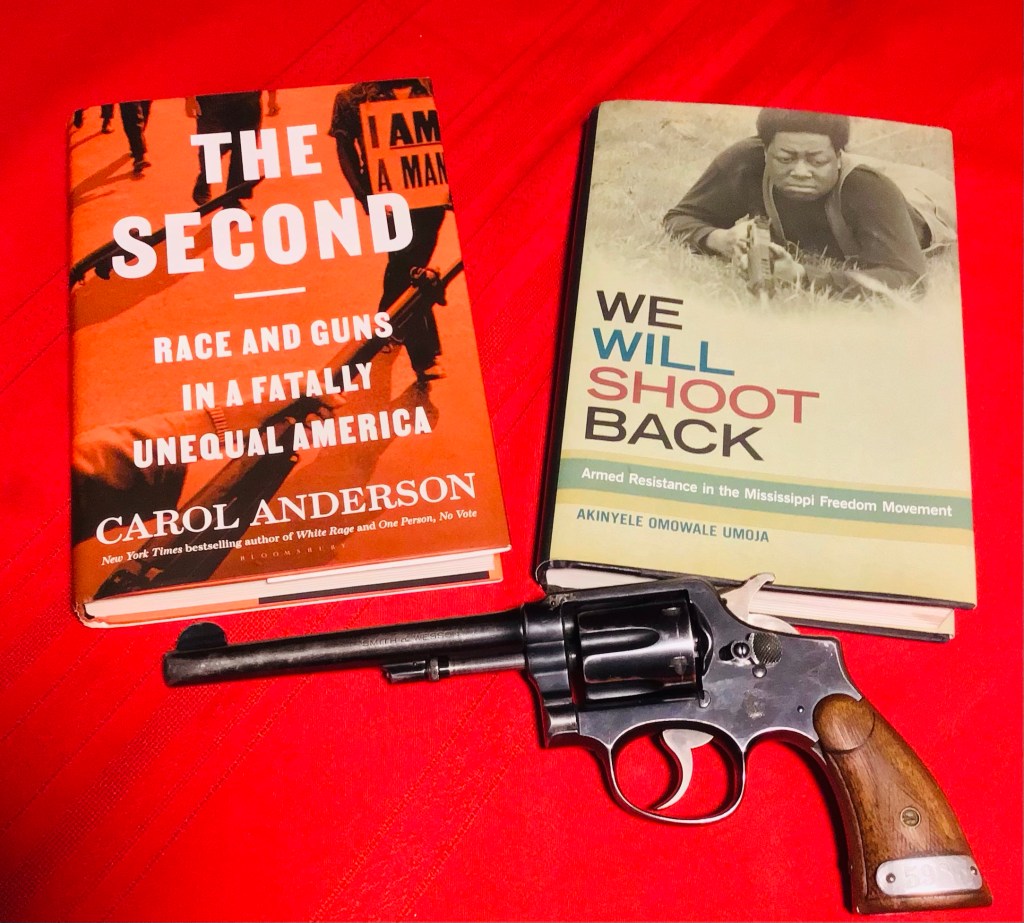
Anderson wrestles with issues no less intense, but from a different angle. She begins scrutinizing how gun control affected Black populations in the Americas under various colonial powers. During British rule, each of the original thirteen colonies enacted stringent laws forbidding enslaved population’s arms, plus highly regulating their ownership by any free people of color. (2) But even these small privileges were curtailed once the War of Independence began. North Carolina offered rewards to those who successfully confiscated guns from Black communities and other states clamped down harder as well. (3) No wonder they were fearful. Martha Washington was perhaps the first to use the phrase “contagion of liberty” (4) describing the terror herself and others whose wealth originated in human bondage felt after realizing so much lofty talk about Liberty, Inalienable Rights, and All Men Being Created Equal might spark similar aspirations among African-Americans, free or enslaved.
Indeed, many people of color were thrilled hearing these values so openly praised, yet in most states, militia membership and firearms had long been exclusively for whites only. Only after US forces suffered repeated defeats did several states begin recruiting Black men, including Connecticut, Massachusetts, Rhode Island, and Virginia. Then, when British forces began moving against South Carolina, US military officers begged state officials to let Black soldiers serve and bolster the ranks of exhausted militias. Incredibly, this American legislature deliberated and finally decided they preferred surrender to the British than allow non-whites arms. (5)
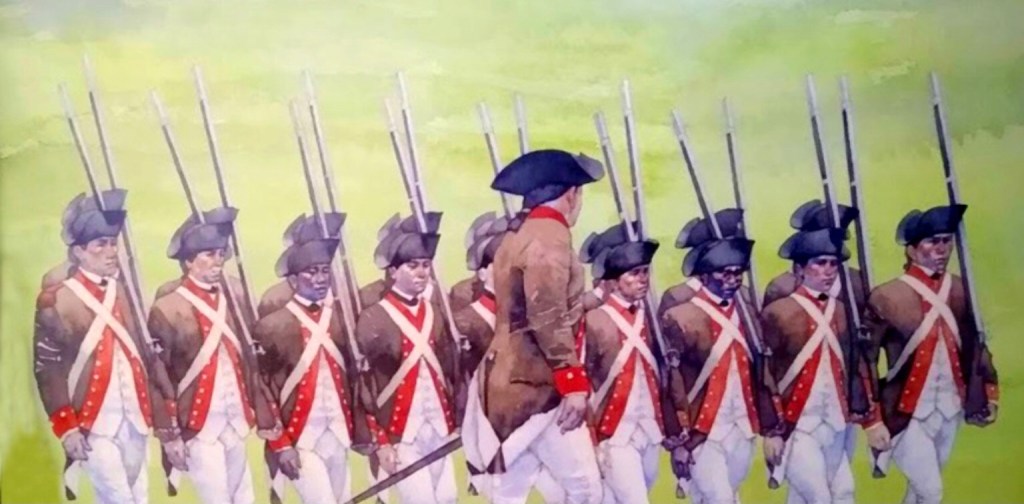
Still, some free Black militias had existed for decades who trained with their own rifles and earned exceptionally brave reputations. This was not under United States law however, but allowed by Spanish and French colonial administrations, especially in Louisiana. As soon as these areas fell under American annexation, the 2nd Amendment provided no protection and gun control laws enforced by white militias disarmed these populations as well. (6) It actually became an embarrassing point during the War of 1812 after British regular soldiers smashed through ineffective militia forces and captured the US capitol. Their next target was New Orleans, where the governor of Louisiana recognized state militia troops were greatly insufficient. Faced with dire circumstances, he offered rifles to Black militia veterans and begged for help. Six-hundred volunteered and joined with a multi-racial force that contributed one of America’s few military victories in the entire war. General Andrew Jackson (of all people) even commended them for special valor. Yet instead of medals, these courageous men were afterward awarded heavy labor details in swamps and the Black militias forcibly disbanded once more. (7)
Anderson’s study exposes a familiar repetition marching forward. While it’s not uncommon for modern pro-2nd Amendment advocates to reference what became known as Black Codes, when denouncing firearms regulations as racist, more rarely do they acknowledge the enforcement role militias played. In the case of Georgia, white men were required to own guns, but specifically in legal reference to the militia’s need for self protection while searching the homes of Black families for weapons. (8) Moving deeper into the nineteenth-century, numerous other states passed strict laws, from Virginia, where free Black people found with firearms received thirty-nine lashes, to Florida, where white militias could search the homes of Black families for arms whenever they pleased, and the more lenient North Carolina, which allowed free Black people to apply for yearly permits before owning anything from shotguns to knives. (9)
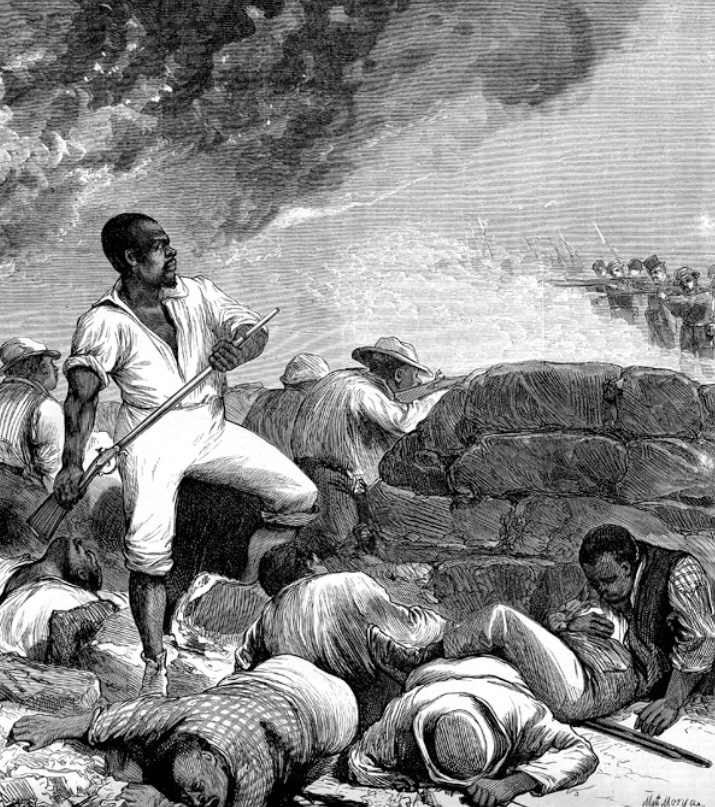
The list of draconian gun control measures considered legal under the 2nd Amendment, even long after slavery was abolished, stretches on. Time and again, it provided no protection for Black communities who defended themselves against organized violent attacks, from the Colfax Massacre of 1873, to the Hamburg Massacre of 1876, and the destruction of Black Wall Street in 1921. Courts and judges routinely dismissed the Constitution, Bill of Rights and 2nd Amendment included, as legal grounds for non-whites to enjoy their full human existence as Americans.
This should be a sharp wake up call to anyone still viewing the 2nd Amendment as some wise, holy governance handed down through time. It’s own authors supported the most invasive firearms confiscations in US history. Like the title of my weblog has long declared, the 2nd Amendment must be occupied and reformed… into a tool for seizing gun culture back from what the founders originally intended. Simply another way for maintaining white supremacy and upper class dominion. Liberty may be a contagion… and Martha Washington meant that as an insult- but we can still take pride spreading it far and wide.
- Akinyele Omowale Umoja. We Will Shoot Back. New York University Press, New York. 2013. 58-9.
- Carol Anderson. The Second: Race and Guns in a Fatally Unequal America. Bloomsbury Publishing, New York. 2021. 18.
- Ibid. 18-19
- Ibid. 45.
- Ibid. 21.
- Ibid. 60.
- Ibid. 69.
- Ibid. 35.
- Ibid. 70-71.
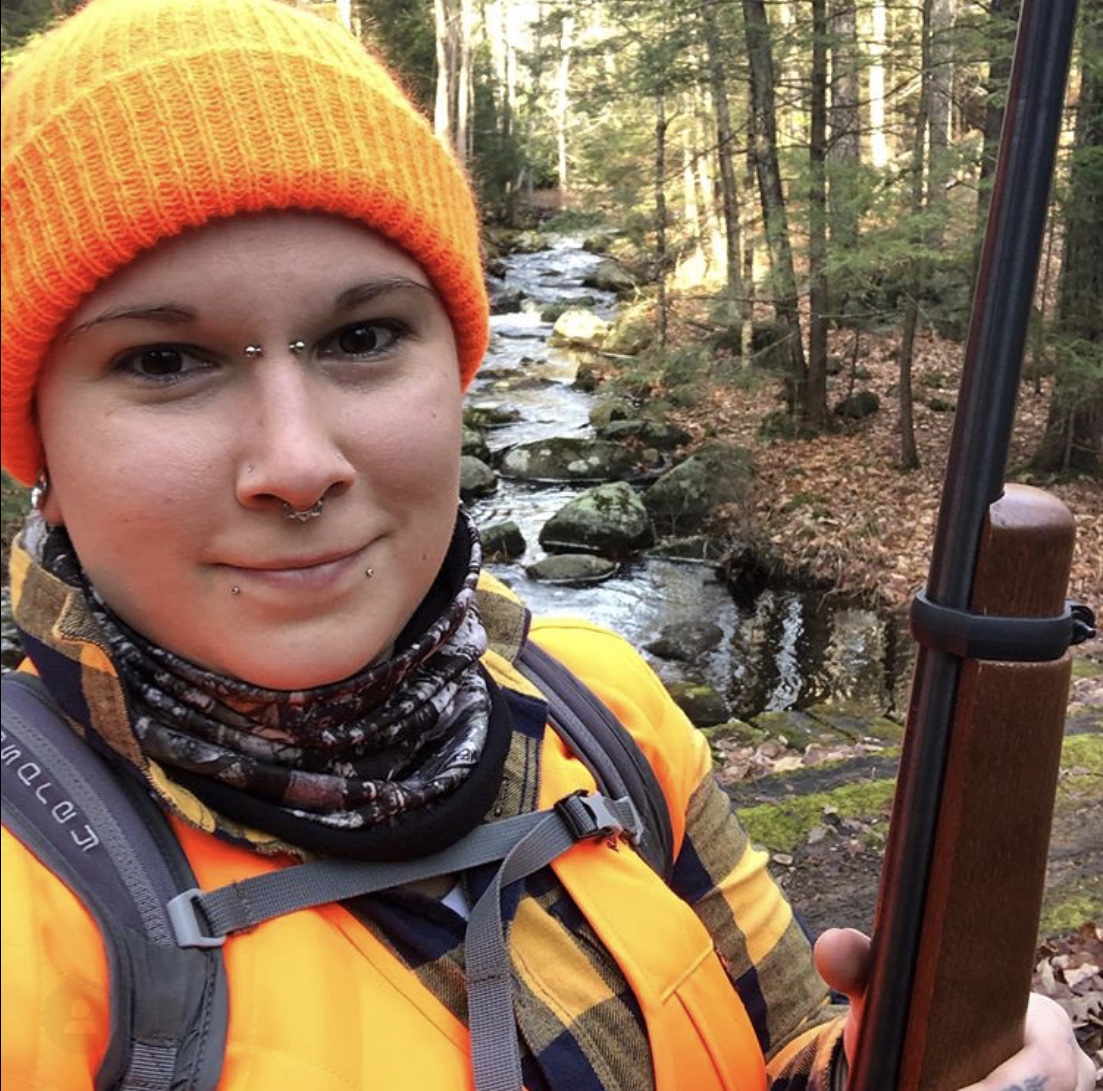

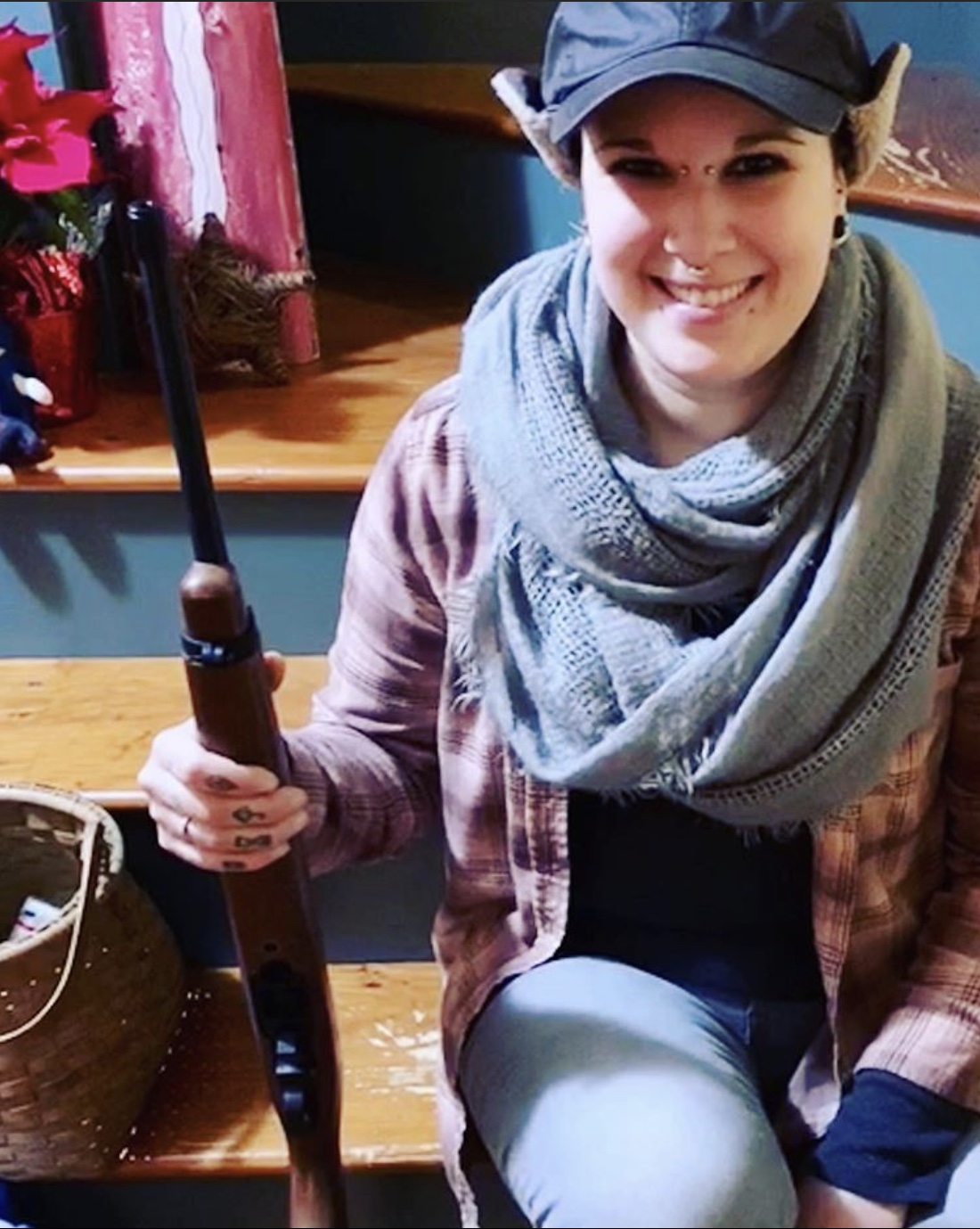
 Ross: Many Liberals I’ve known considered hunting unethical. How would you respond to their concerns?
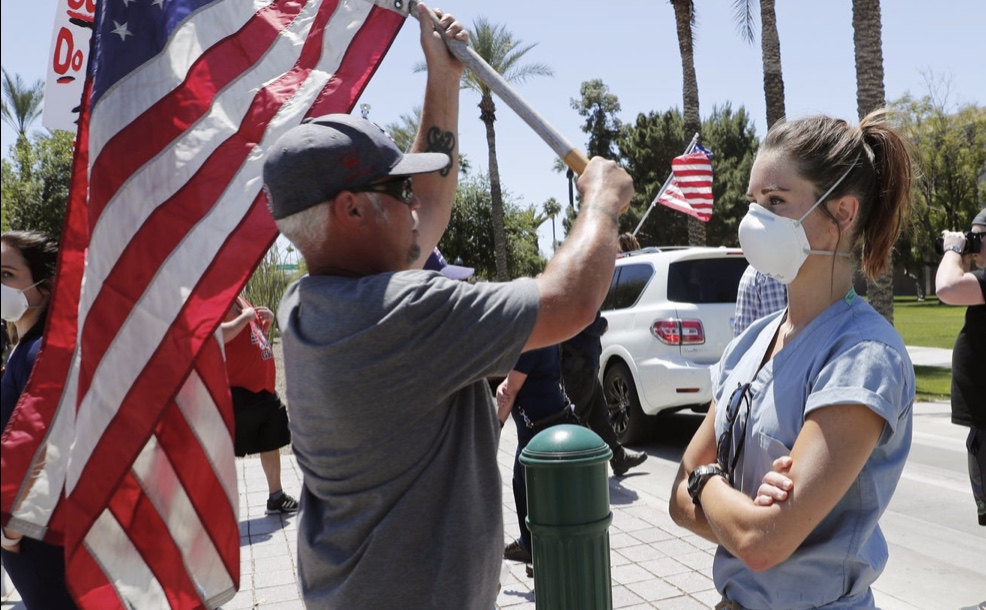
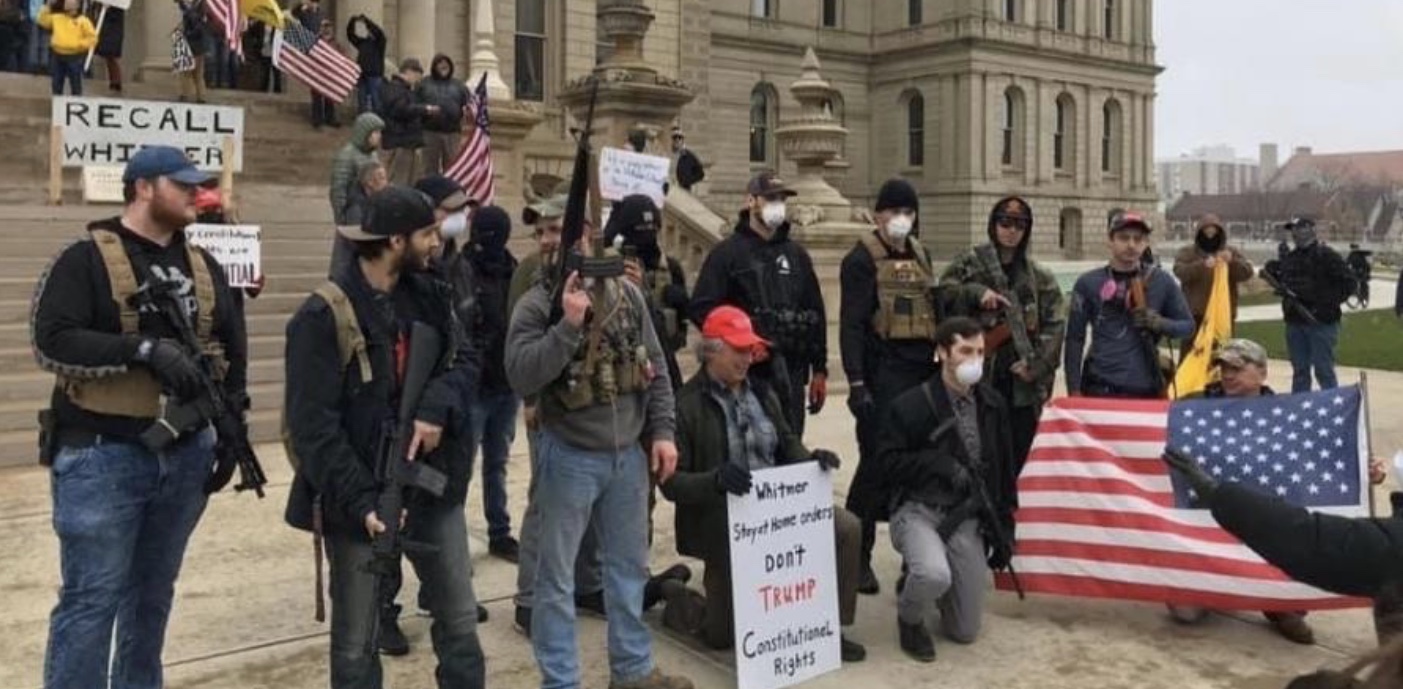
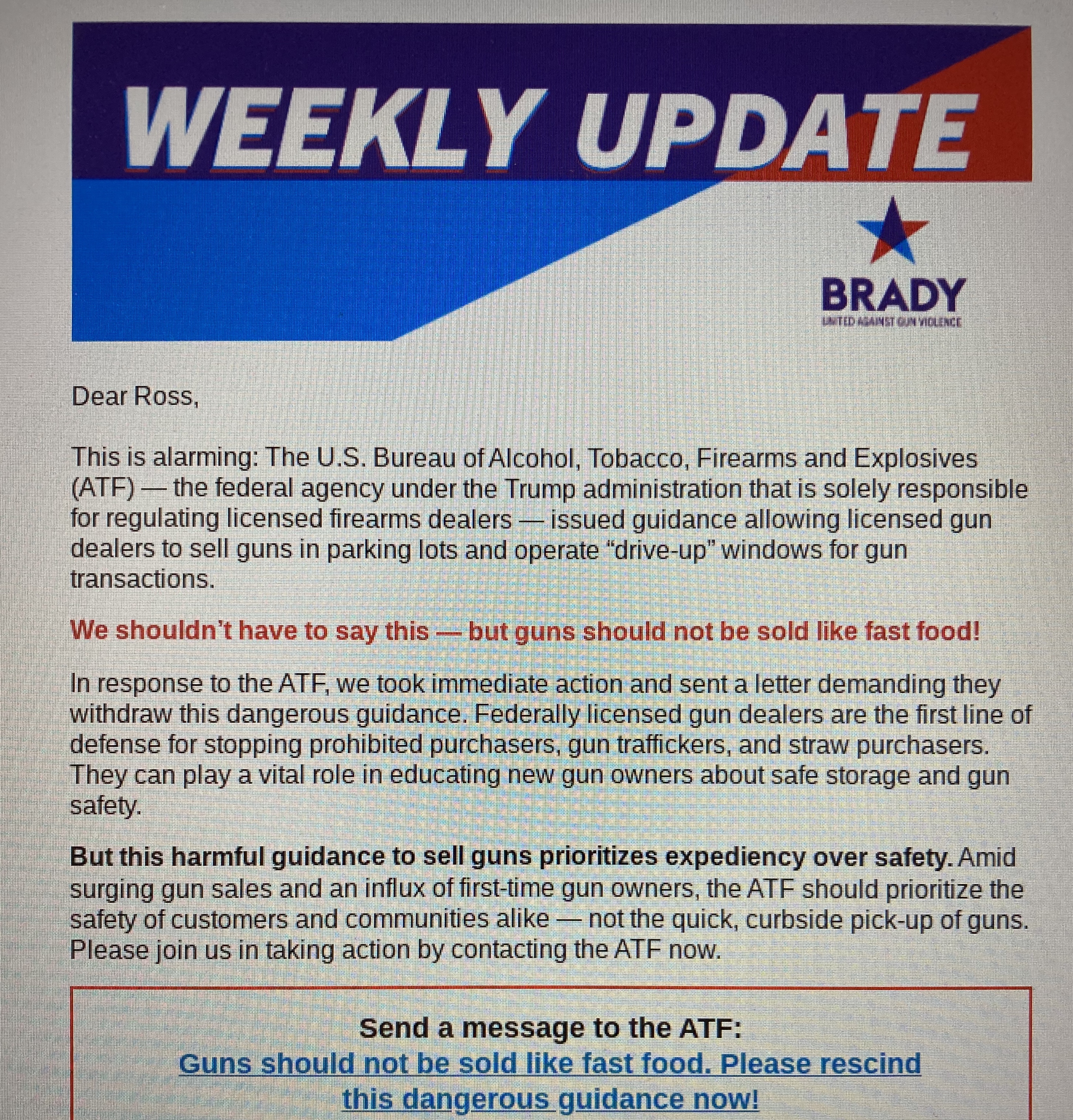 The pandemic has also proven useful to gun control groups, who always find images of militia types effective fundraising tools and aren’t above distorting a medical crisis to push their agenda. For example, in late April the Brady organization sent out an email decrying how some firearm retailers had adopted a drive-through model, claiming “guns should not be sold like fast food” and that this allowed “the quick, curbside pick-up of guns.” Of course, they didn’t mention that federal background checks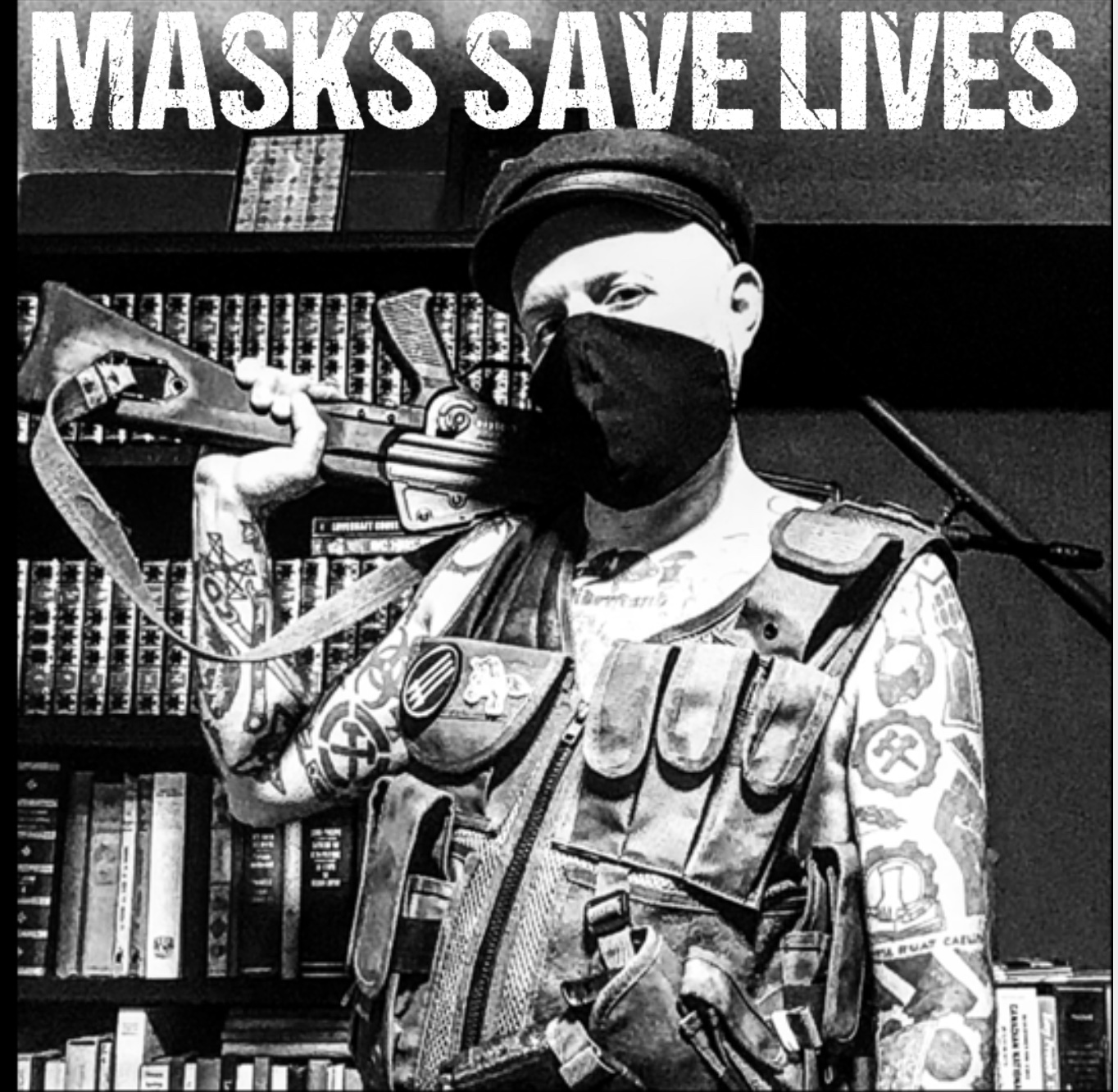
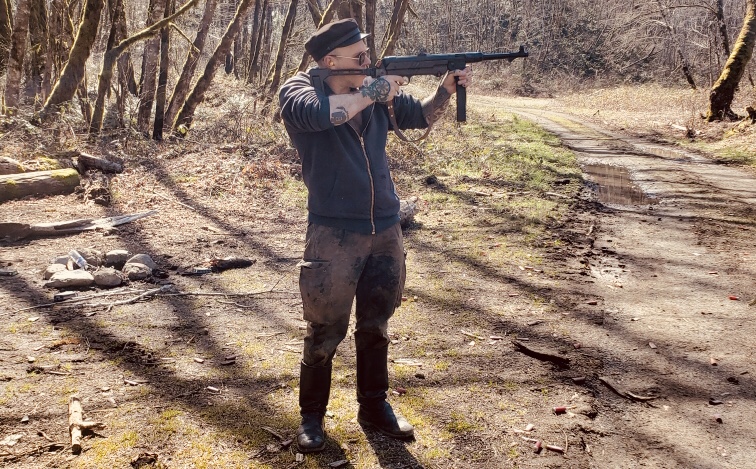
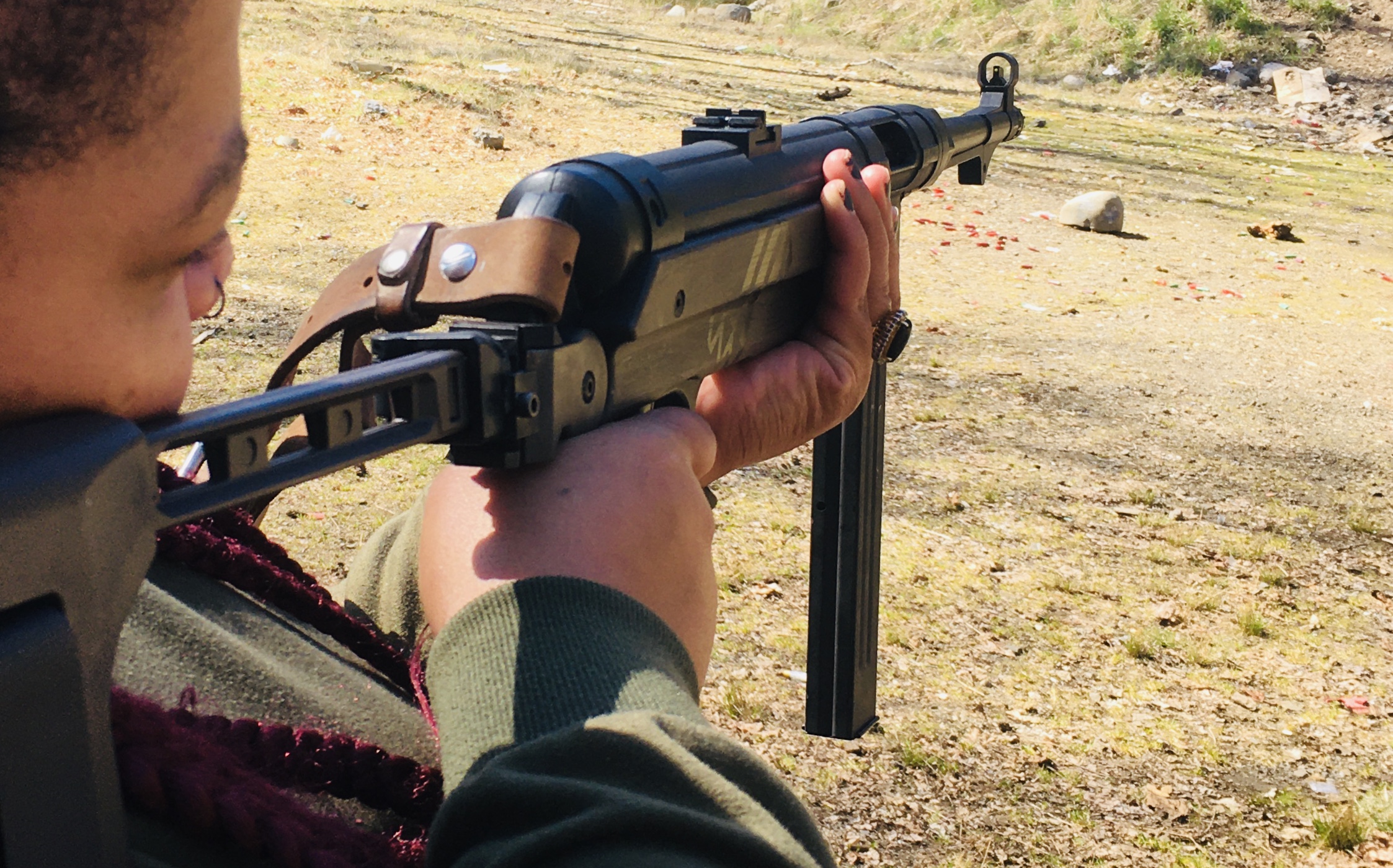 I headed out to the woods for a range day, with an Evo Scorpion and PSA AKV as sub-gun comparisons. For my first test, I threw in a magazine of FMJ rounds, expecting it might need a break in period. Instead, each shot rattled off just fine, the trigger breaking crisply every time. I ran through three more magazines with zero problems. Surprised but pleased, I switched to a mag of Federal 115 gr. +P+ hollow points. Earlier reviews specified GSG MP-40s struggled chambering FMJ rounds and performed even worse with other varieties. Again, no issues. Next I tried the same experiment with Magtech flat-nosed 95 gr. JSP. They worked great also.
 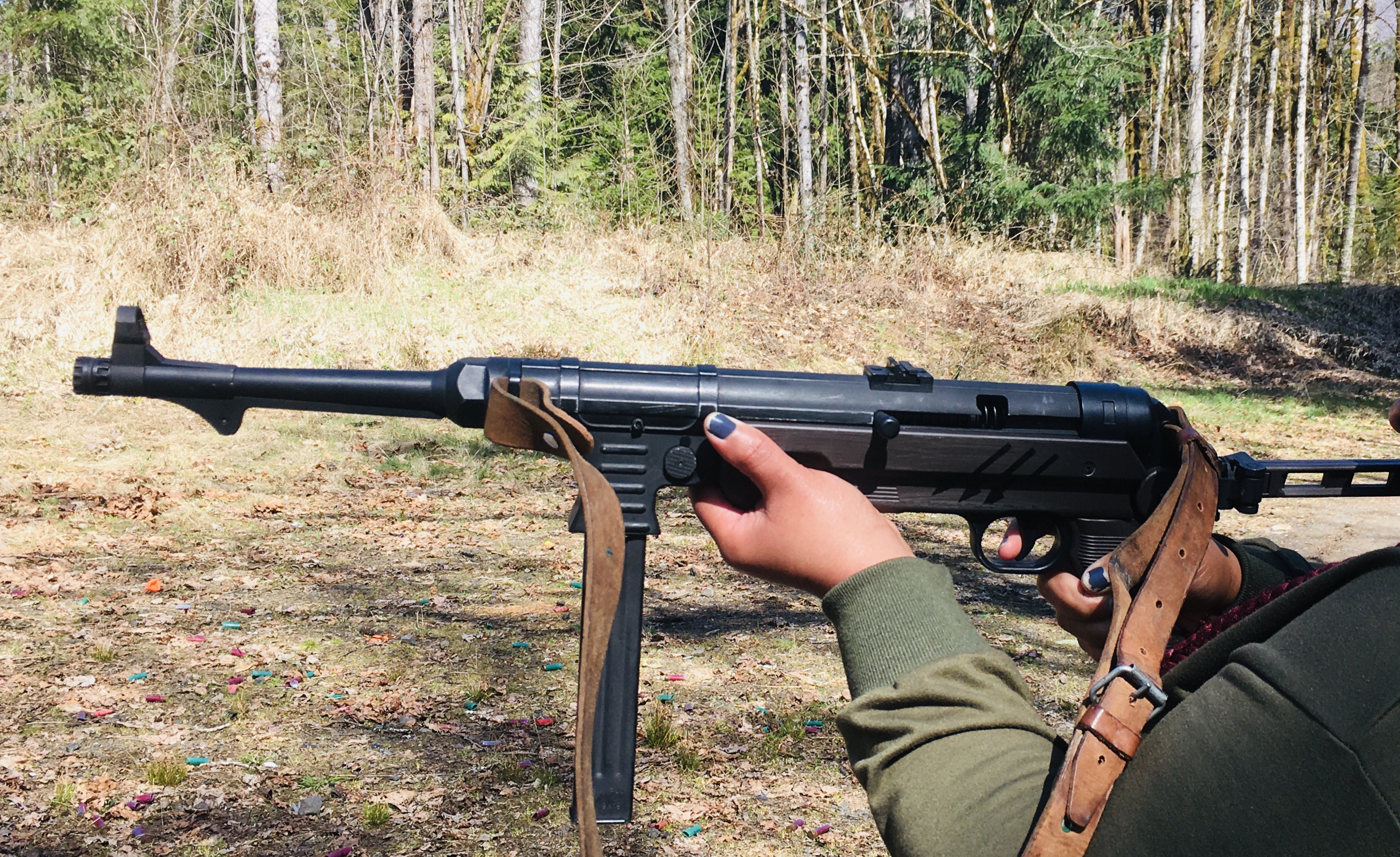 Accuracy was impressive. My partner and I fired casually at cans from about 40 yards and made hits easily. She appreciated how the long forward mass kept it steady in her hands. I definitely agreed. If any contrast appeared between the other guns, it highlighted the advantage that heft ads for follow up shots. My Scorpion is a pure delight, but definitely bounces a bit from recoil. Same with the AKV, though less pronounced, as it has a solid steel fore grip. No such movement from the MP-40. It’s weight could grow annoying slung over your shoulder, but makes double taps feel like it’s tank mounted.
  The safety requires special mention. It’s a 360 degree spinning dial mounted under the receiver just behind the mag well. An arrow points forward for FIRE and crosswise for SAFE, assuming you have time to flip it upside down and check. I used red fingernail polish to highlight the F side and left it black for S which at least allows visual inspection from the side. Still, it’s a pretty questionable system. In times of urgent combat stress, unslinging the MP-40 and verifying its status seems dubious. I’d be curious to know what the WWII German manual of arms suggested regarding that. The best method could potentially be three main conditions.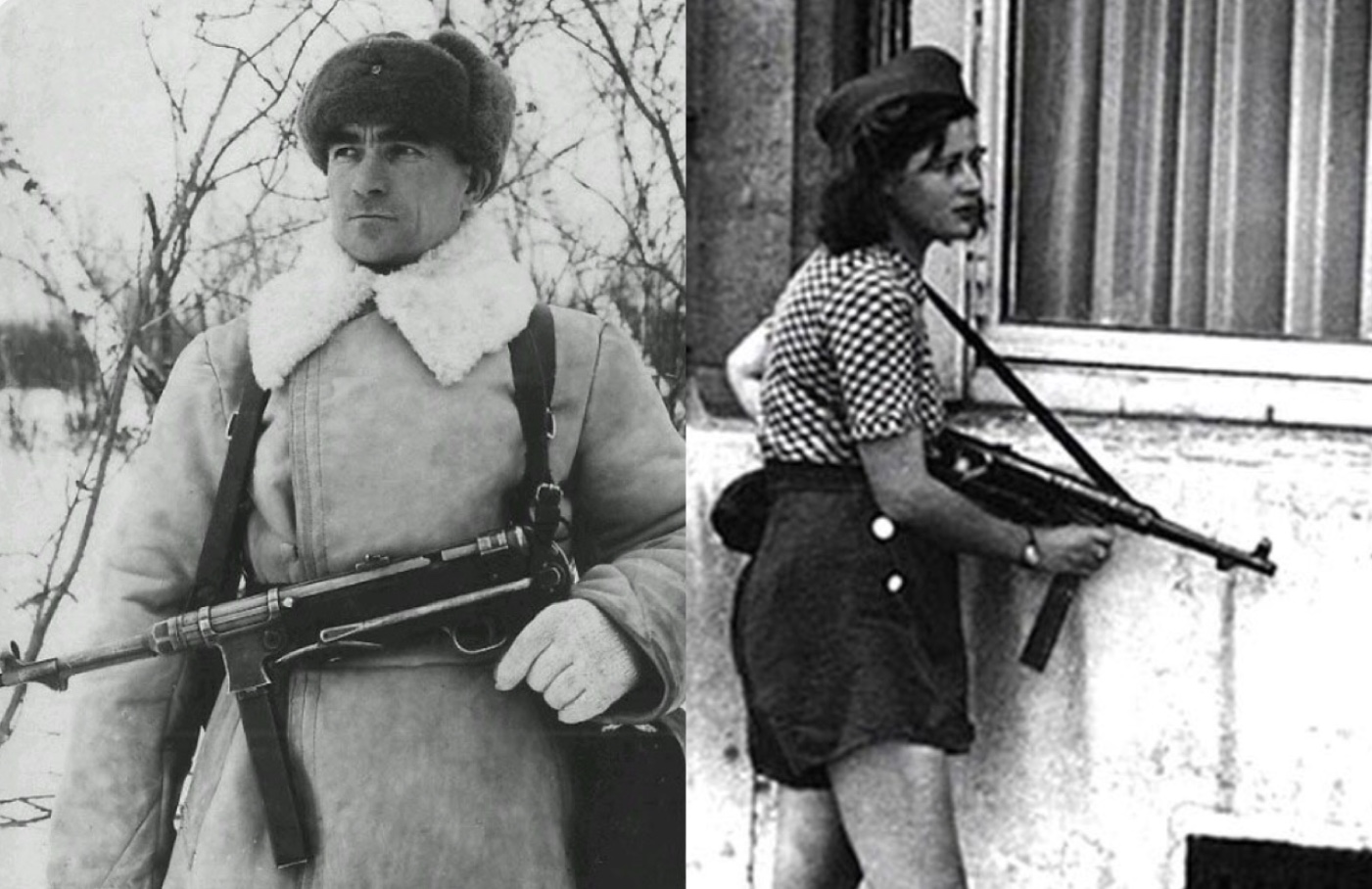
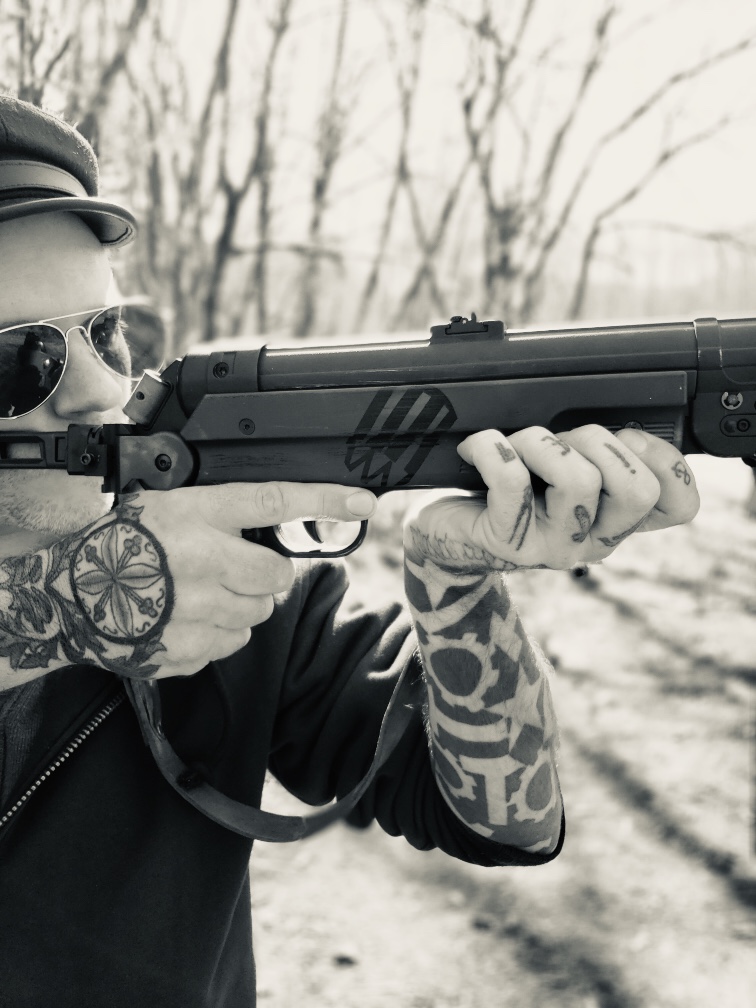
 It took a few days longer than I expected for the Brady anti-gun organization to send out an email addressing Americans stocking up on firearms as fears about the corona virus spread. They used one of their typical fundraiser templates, building off worries that more armed individuals must necessarily cause violence. It’s an effective emotional argument, yet glosses over the more complicated reality that
 Then this September, Kohfield appeared on the

 Occupy the 2nd Amendment