
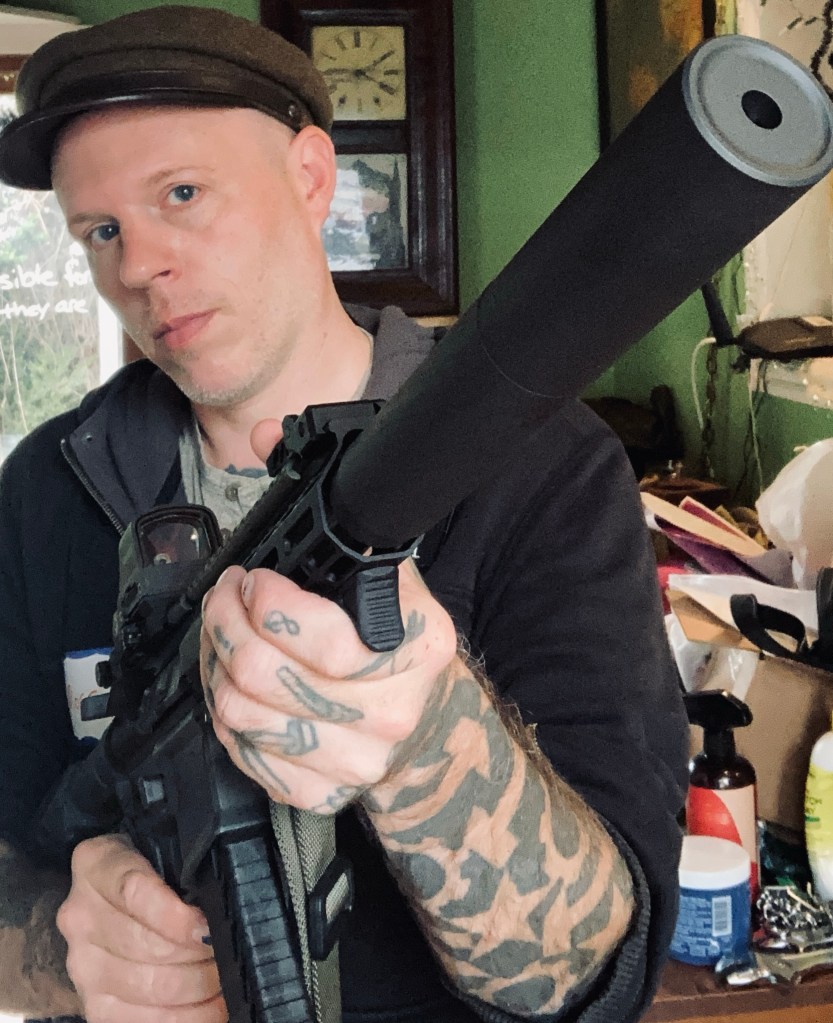
It’s a sensational headline, but one that reflects reality in 2026 as American gun rights reach their greatest expansion in nearly a century, while social violence hits record lows. The firearms media is naturally euphoric, rarely needing any excuse to promote their MORE GUNS = LESS CRIME narrative, while some mainstream outlets report the trends separately. What both views overlook is the big picture. Simply, murder rates regularly rise and fall with no clear connection to firearm policies. Relatively easy access to guns is not the only, or even most significant factor.
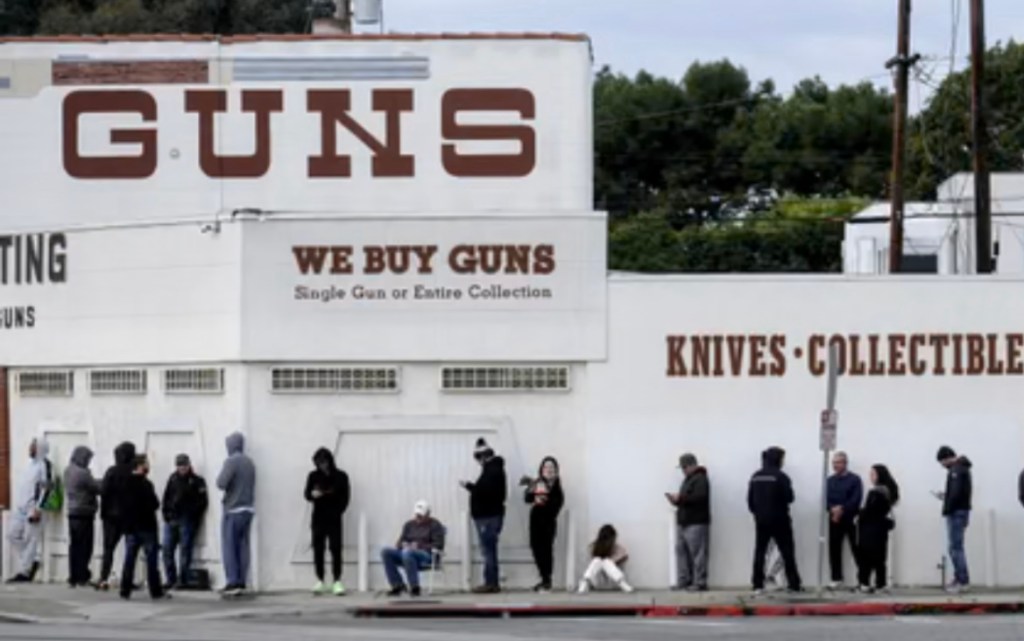
Gun restrictions in the United States have declined at a steady pace ever since the expiration of the federal Assault Weapons Ban (AWB 1994-2004). More states relaxed right-to-carry laws and multiple firearm buying sprees took place, most famously during the 2020 covid panic where citizens lined up around blocks to arm themselves. Still, during the last decades since murder statistics peaked in the late 80s-early 90s, violence lowered multiple times to rates not seen since the 1950s.
Despite the lack of evidence, MORE GUNS = MORE CRIME remains an article of faith among liberals, just as the opposite remains true amongh conservatives. I was reminded of this around mid 2022 after Russia expanded military operations against Ukraine into a full invasion. Media outlets who ordinarily condemned assault style weapons in American civilian hands, positively reported on ordinary Ukrainians being issued fully automatic rifles.
I spoke with a well educated liberal friend about this and she was horrified, because in her view, Ukraine now faced Russian aggression plus an epidemic of mass shootings internally. I pointed out that military grade rifles had been widely available for several months, yet no such massacres occurred. My friend looked me dead in the eyes and declared that obviously Ukrainians were machine gunning each other down in droves and if the news wasn’t covering it, then the NRA must be suppressing the truth.

Of course, almost five years later, the arming of Ukrainian society no longer makes headlines, much as gun rights progress in the US has taken place with little sensation. However, one of those slowly moving expansions recently caused a historic shift in federal firearms policy and deserves attention. So, a brief history lesson:
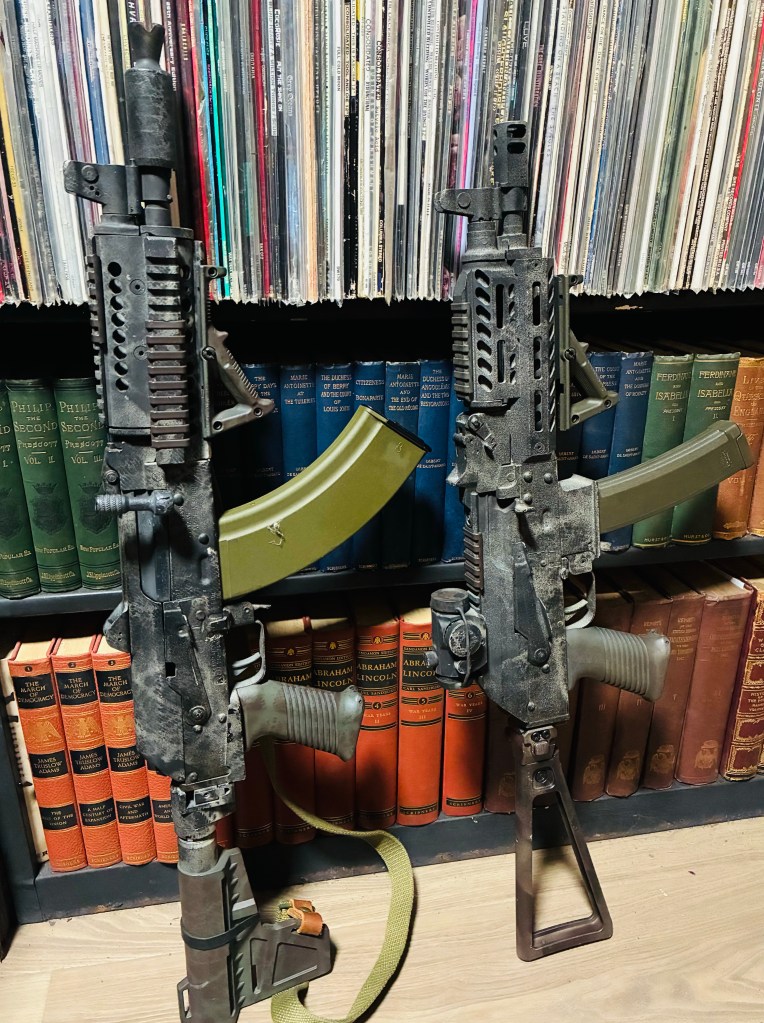
The National Firearms Act (NFA) of 1934 was notable as the first major congressional 2nd Amendment restriction which regulated many items such as sound suppressors, plus created a category of guns called Short Barreled Rifles (SBRs) with barrels under 18 inches. These all became highly controlled and required a $200 tax stamp. Then after WWII, US military inventories contained excess quantities of M1 carbines with 16 inch barrels. The law was changed, lowering SBRs below 16 inches to facilitate surplus sale. While inflation gradually made the $200 fee less daunting, SBR and suppressor approval times ran many months long, altogether making them relatively niche interests. Some ‘rifle style’ firearms were manufactured with shorter barrels, but these skirted SBR restrictions by lacking shoulder stocks and forward grips, making them awkward to operate.
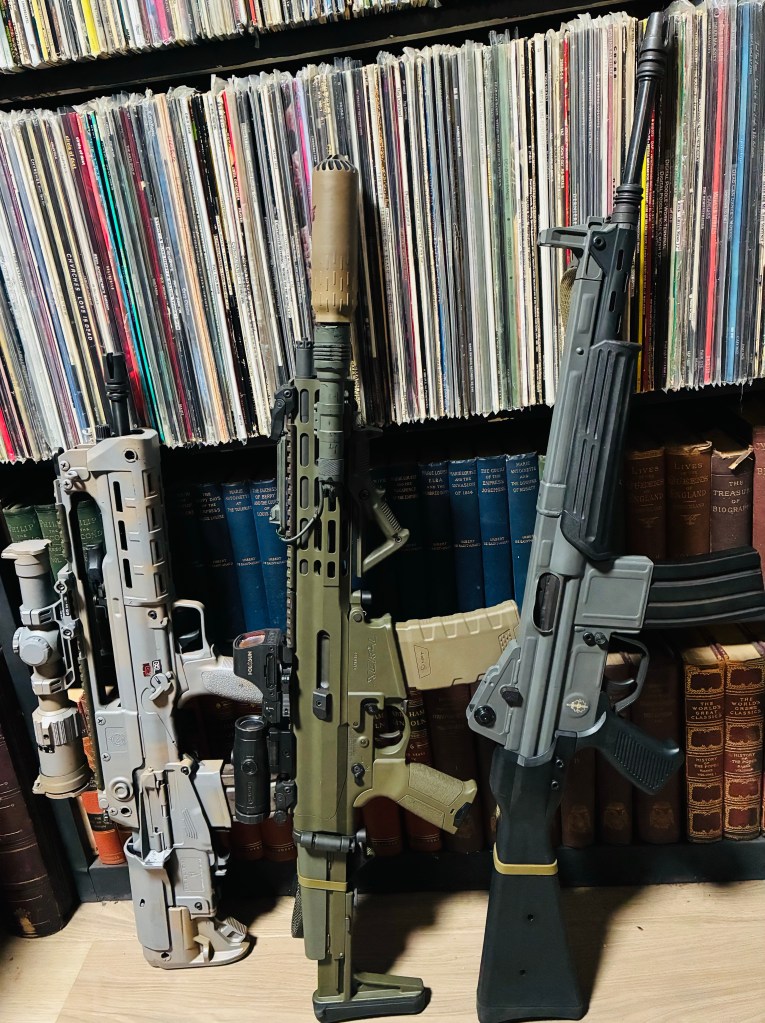
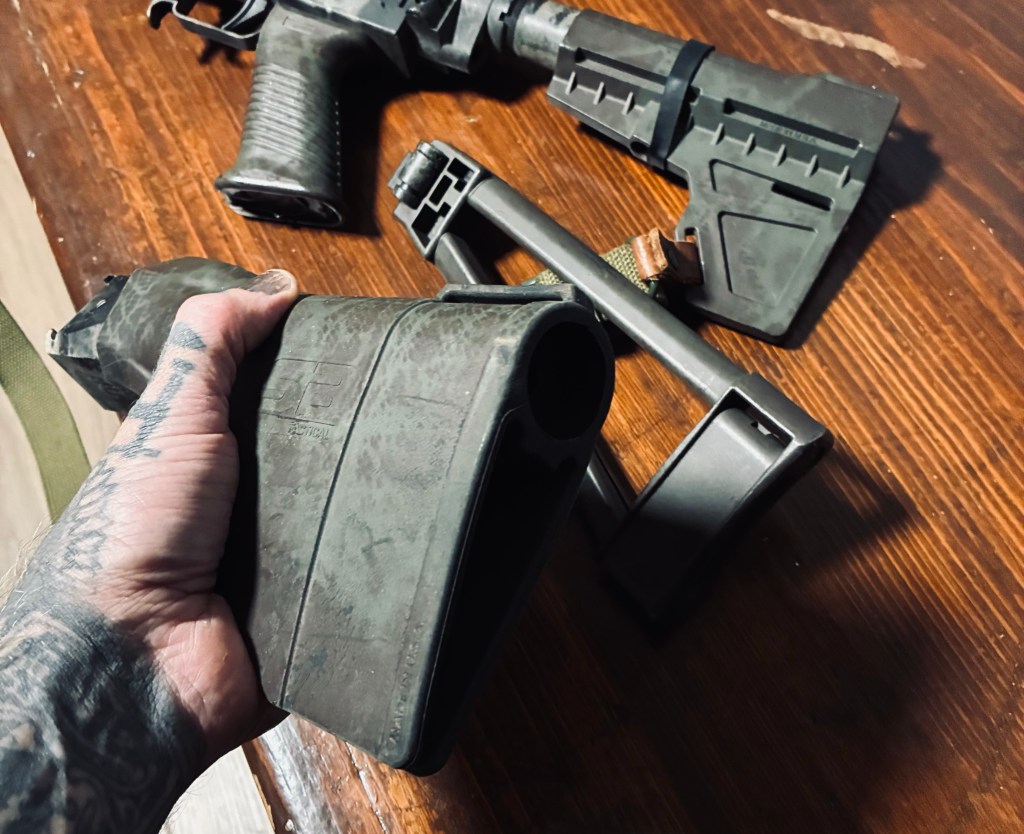
Then in 2013, the ATF approved a disability brace which allowed ‘rifle style’ guns to be strapped around the forearm for greater controllability. It wasn’t long before opportunistic users discovered these braces could be shouldered like a stock, essentially creating an SBR workaround. Over several years, these braces grew quite popular and evolved to a point where the difference between stock/brace was largely a cosmetic point.
Brace use became so widespread and transparent as a way of circumventing SBR regulation that in 2022, the ATF declared a 120 day “brace amnesty” where owners could bypass the regular fee and register their ‘rifle style’ firearms as SBRs. The anti-brace rule was struck down by federal courts in 2024, though several states maintain their own laws regarding them. The government decided against appealing the court ruling in 2025.
Next, at the beginning of 2026, the ATF dropped their $200 tax stamp requirement for several regulated categories, including suppressors and SBRs. In addition, wait times for both items gradually dropped from months to days. Numbers are difficult to break down, but in my personal experience, I never knew anyone with an SBR or short ‘rifle style’ firearm before 2013. Now both are extremely common. I also remember taking an NPR reporter shooting in 2019 and pointing out a nearby man using a suppressor, that sight being somewhat unusual. Lately it’s a rare range trip without encountering several and the reduced noise and concussion is very much appreciated.
But the most dramatic development arrived this October 9th when the ATF released a letter declaring they would no longer enforce the 1934 NFA regulation of SBRs and suppressors. That essentially means in states without stricter local laws, purchasing a rifle with a 16- inch barrel and suppressor requires nothing more from the purchaser than someone buying a 16+ inch rifle the month before.
It’s a signal event in gun rights history, even though technically the NFA remains in place. This ruling might easily reverse through subsequent legal opinions, but the fact remains, millions of suppressors are already in civilian hands and many more millions of SBR/braced ‘rifle style’ firearms do as well. The original 1934 law was a response to sensational massacres of the 1920’s gangster era but even gun control groups struggle finding significant social violence they can blame on increased ‘short rifle’ and suppressor availability. Countering popular opinions fueled by imagery of scary black rifles, the vast majority of fatal shootings involve handguns, just as suppressors are rarely used by criminals. For example, an academic survey of federal court cases between 1995-2005 turned up just two murders using them.
More recently, an articles by the Giffords Law Center to Prevent Gun Violence listed only three fatal shooting events between 2013-2024 involving a suppressor, including Luigi Mangione’s alleged assassination of a corporate healthcare CEO. Tellingly, the anti-gun Everytown website reports that:
“Americans owned just over 285,000 silencers in 2010, but that number has ballooned to 4.9 million as of July 2024, representing a 1,604-percent increase. Of those, 1.4 million were purchased and registered in the first six months of 2024 alone.”
The fact they connect no increased crimewave with this sensational timeframe says it all.
Violence is, of course, a major social problem and the availability of firearms in America can’t be completely separated, so it’s frustratingly simplistic when liberals/conservatives fall back on firearms being the driving cause/cure. Sadly, as long as arguments persist about barrel length, magazine capacity, firing rate and how loud or quiet guns actually sound, there is less room to discuss class inequality, misogyny, racism, and other toxic features that make US culture uniquely dangerous. Hopefully this current drop in deadly statistics can force a reckoning about what really poisons society and for those who truly wish a more just and equitable world, help plot our paths forward.

